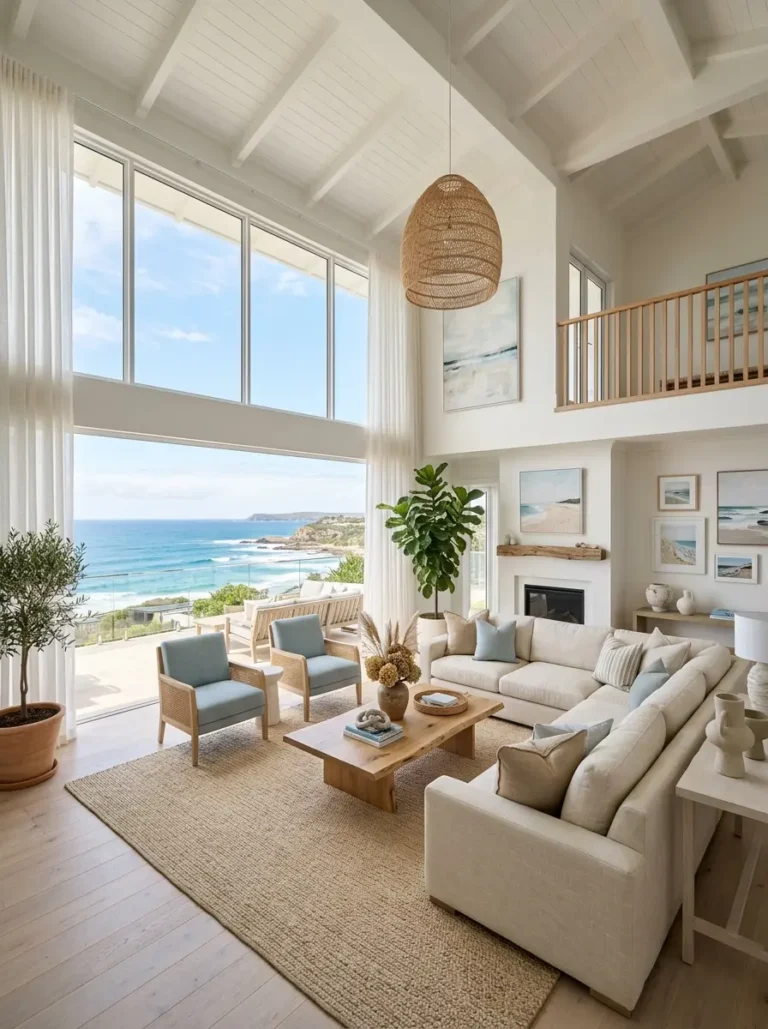
18 Gallery Wall Living Room Ideas to Inspire You
Gallery walls are a beautiful way to turn an empty living room wall into a space that feels personal, stylish, and thoughtfully decorated. Whether you love classic black-and-white artwork, family photographs, botanical prints, or a more eclectic mix, the right gallery wall can instantly create a focal point while adding character to the room.
The best gallery wall ideas are not just about filling a wall with frames. Choosing a cohesive color palette, mixing artwork sizes, balancing different frame styles, and leaving the right amount of space between pieces can make the entire arrangement feel intentional. These 18 gallery wall living room ideas will help you create a display that looks beautiful without feeling random or overcrowded.
1. Black and White Gallery Wall for a Timeless Look
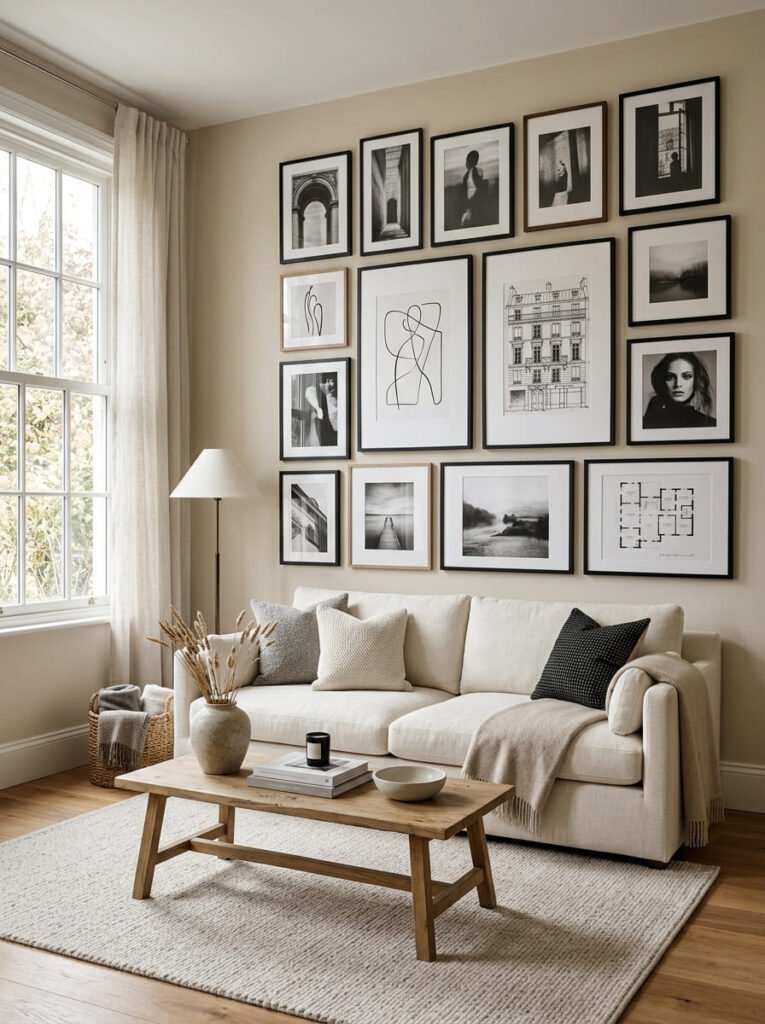
Black and white artwork creates a polished gallery wall that feels classic without becoming dated. Combine abstract prints, photography, sketches, or architectural artwork while keeping the palette consistent. This approach works especially well against white, beige, or soft gray walls where the artwork can become the main focal point.
Use different artwork subjects but repeat black frames or white matting to maintain visual unity. A few larger pieces mixed with smaller prints can keep the arrangement interesting without making the wall feel crowded.
Palette
Black, white, soft gray
Feel
Timeless, sophisticated
2. Vintage Gallery Wall with Collected Character
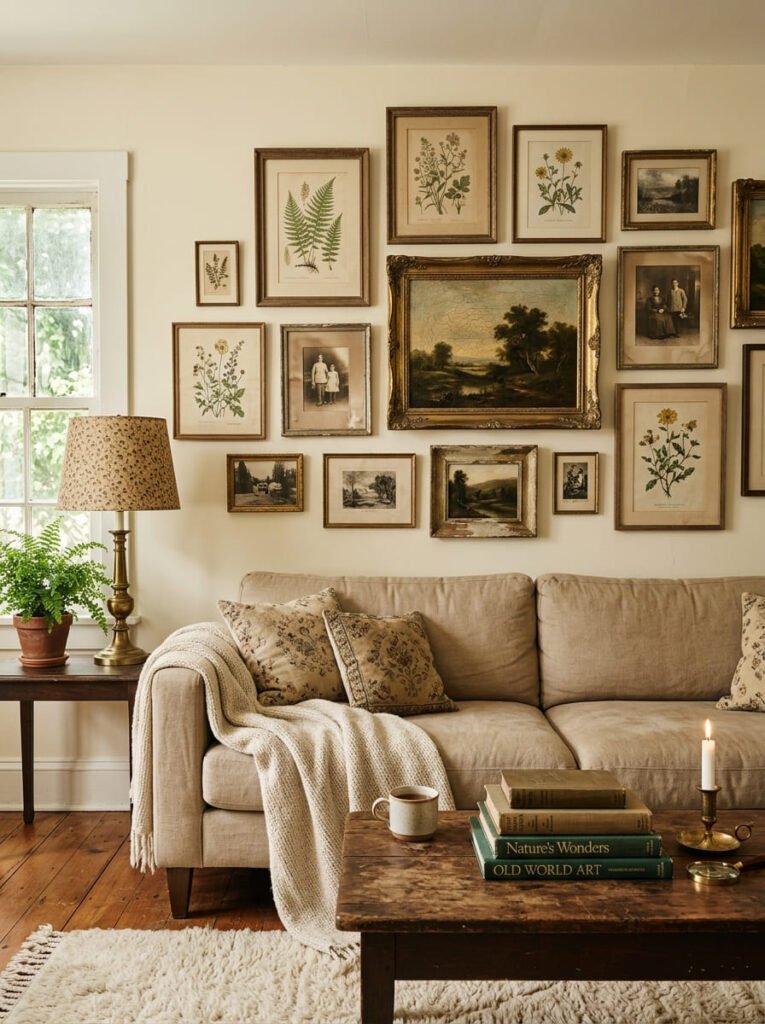
Vintage artwork can make a living room gallery wall feel warm, layered, and collected over time. Mix antique-style botanical prints, old photographs, traditional paintings, and nostalgic illustrations instead of relying on one matching set of artwork.
Choose frames in aged wood, antique gold, or muted bronze to strengthen the vintage character. Slight differences between the frames are helpful because they make the arrangement feel personally collected rather than purchased as a complete package.
Quick Tip
Mix wood and aged-gold frames instead of matching every frame exactly.
3. Botanical Gallery Wall for a Natural Feel
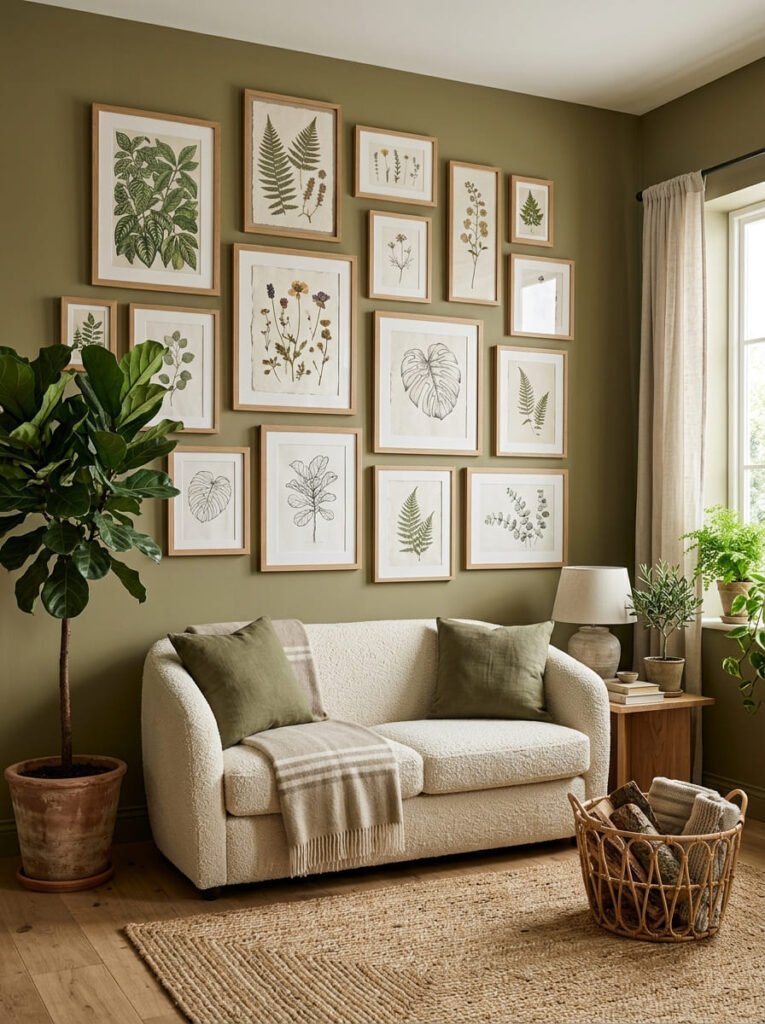
Botanical artwork brings a calm, nature-inspired quality to the living room. Combine pressed-flower illustrations, leafy prints, floral drawings, or delicate plant photography to create a collection that feels connected without looking overly matched.
A shared green, olive, or earthy palette helps different botanical subjects work together. Place the gallery wall near natural light and complement it with real houseplants, woven textures, or wood furniture for a relaxed organic atmosphere.
Shared Palette
Green, olive, cream, earthy brown
Avoid
Too many unrelated colors that compete with the botanical theme.
4. Eclectic Gallery Wall with Mixed Frames
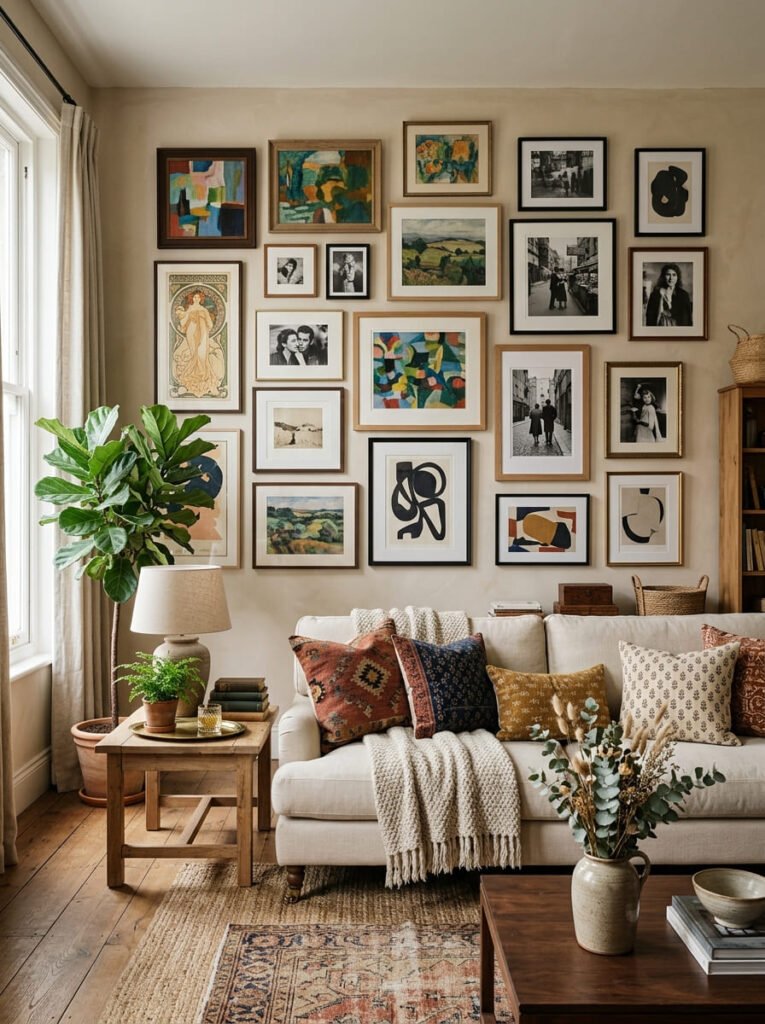
An eclectic gallery wall lets you combine photographs, paintings, posters, sketches, and decorative art without following one strict theme. The variety gives the living room personality and makes the display feel more individual.
The key is creating one connection between the different pieces. Repeat a color, frame finish, subject, or spacing pattern so the arrangement still feels intentional. Balance larger statement pieces with quieter artwork to prevent one area from becoming visually heavy.
Keeping It Cohesive
- Mix photos, paintings, posters, and prints.
- Repeat one color or frame finish.
- Balance bold pieces with quieter accents.
5. Monochrome Gallery Wall for a Modern Look
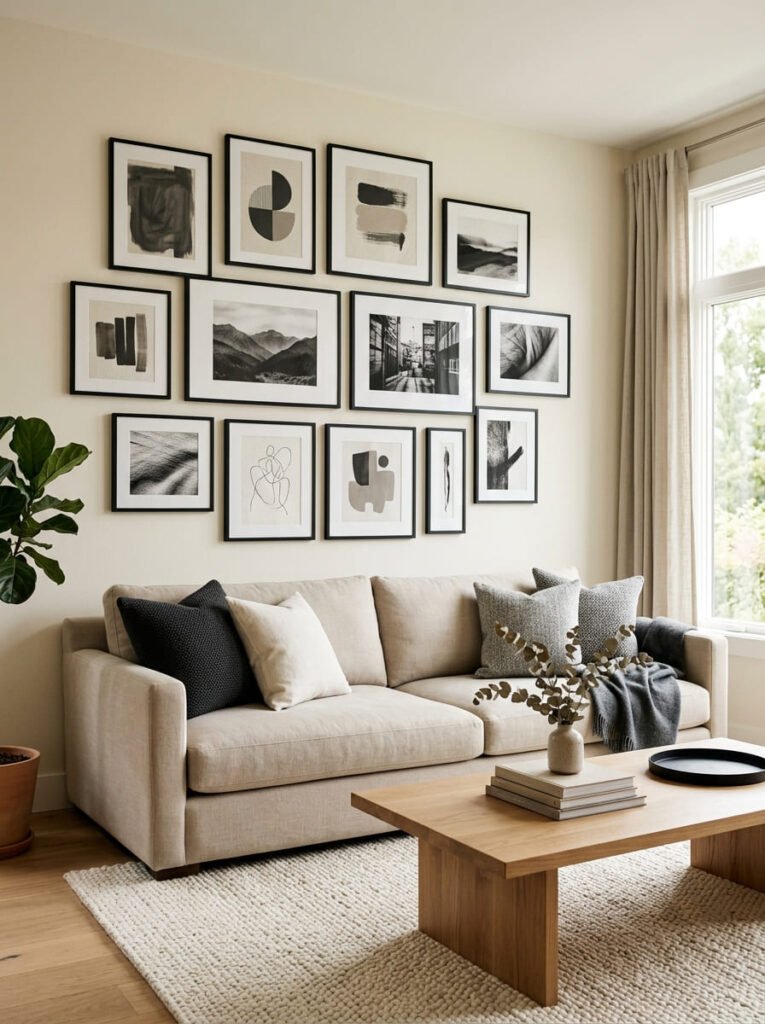
A monochrome gallery wall uses one dominant color family to create a clean and sophisticated display. Black, charcoal, blue, beige, or even muted terracotta can become the visual thread connecting different artwork styles.
Choose several pieces with related tones but different subjects or textures so the wall does not feel repetitive. Keeping the frames simple and the surrounding furniture neutral allows the monochrome artwork to anchor the room without creating visual clutter.
Palette
One dominant color family
Selection
Different subjects, similar tones
Feel
Clean, modern, cohesive
6. Framed Mirrors Mixed with Artwork
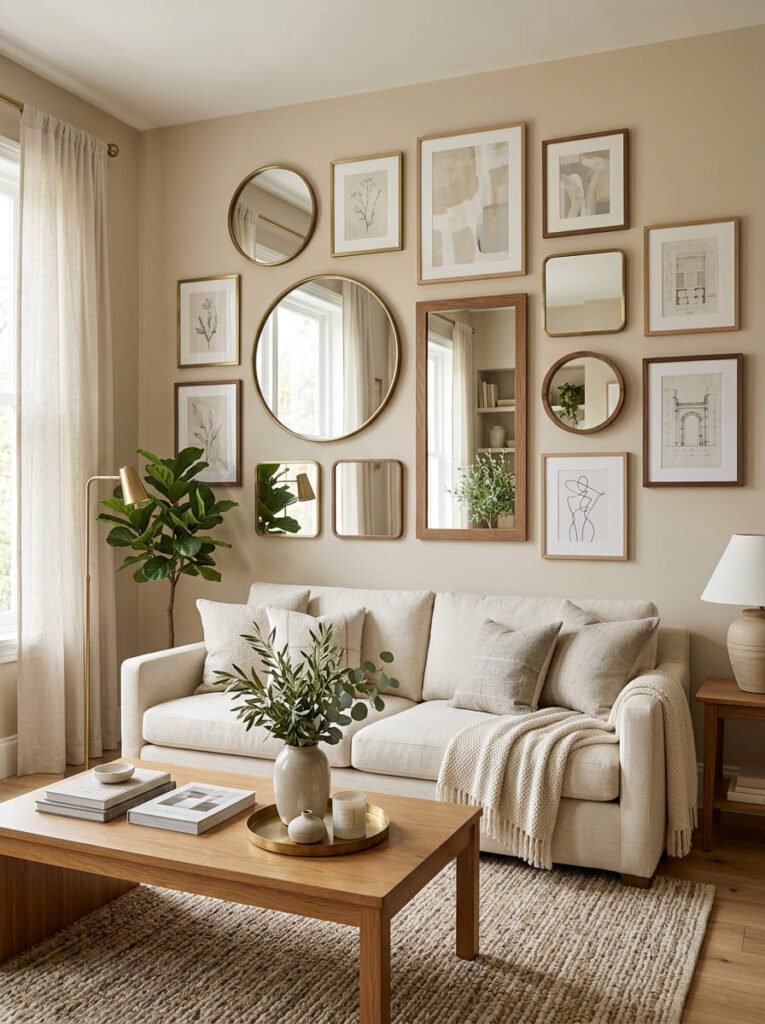
Framed mirrors can make a gallery wall both decorative and functional by reflecting natural light and adding depth. Mix round, rectangular, and square mirrors with artwork to create more visual variety than a wall made entirely from pictures.
This approach works particularly well in smaller living rooms or darker spaces. Position at least one mirror where it can reflect a window, lamp, or another attractive part of the room rather than an empty wall.
3 Easy Steps
- Mix different mirror shapes.
- Combine mirrors with artwork.
- Aim one mirror toward a light source.
7. Family Photo Gallery Wall for a Personal Touch
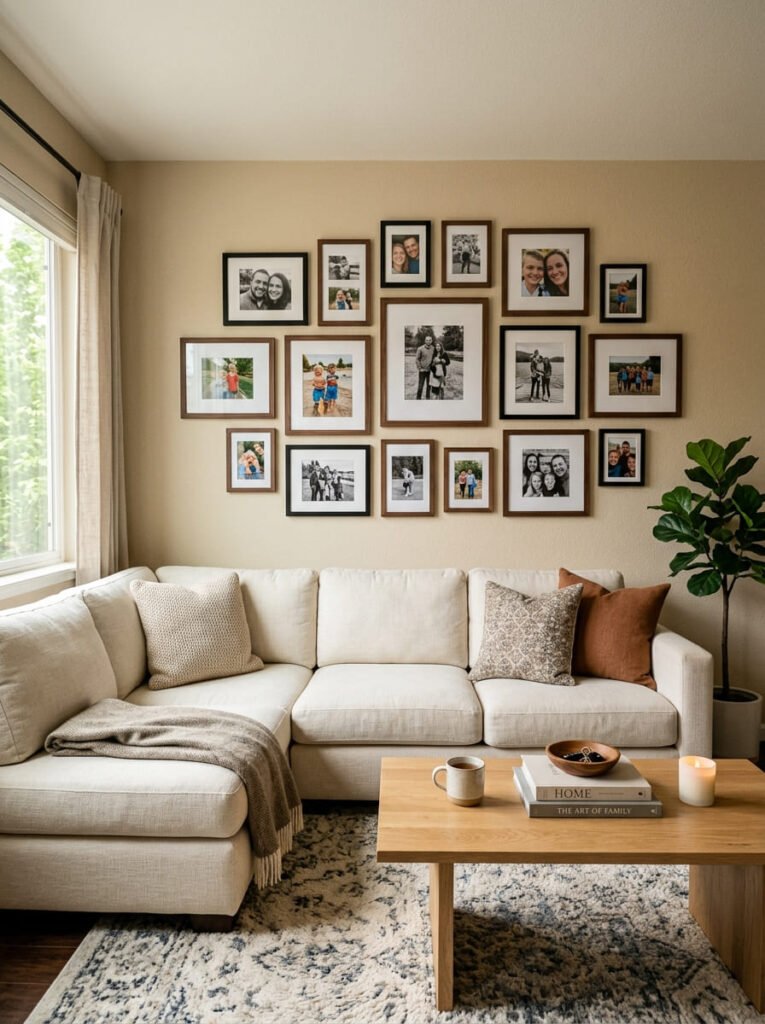
Family photos can make a living room gallery wall feel genuinely personal rather than simply decorative. Mix portraits, candid moments, vacation memories, and everyday family photographs to create a collection that tells a story and adds warmth to the room.
For a more polished look, combine black-and-white photographs with a few color images. Use similar frame finishes or matting to connect the different photos while still allowing each memory to stand out.
Do This
- Mix candid and posed photographs.
- Combine black-and-white with color images.
Skip This
- Using only matching formal portraits.
- Choosing photos with no personal meaning.
8. Geometric Gallery Wall for a Contemporary Edge
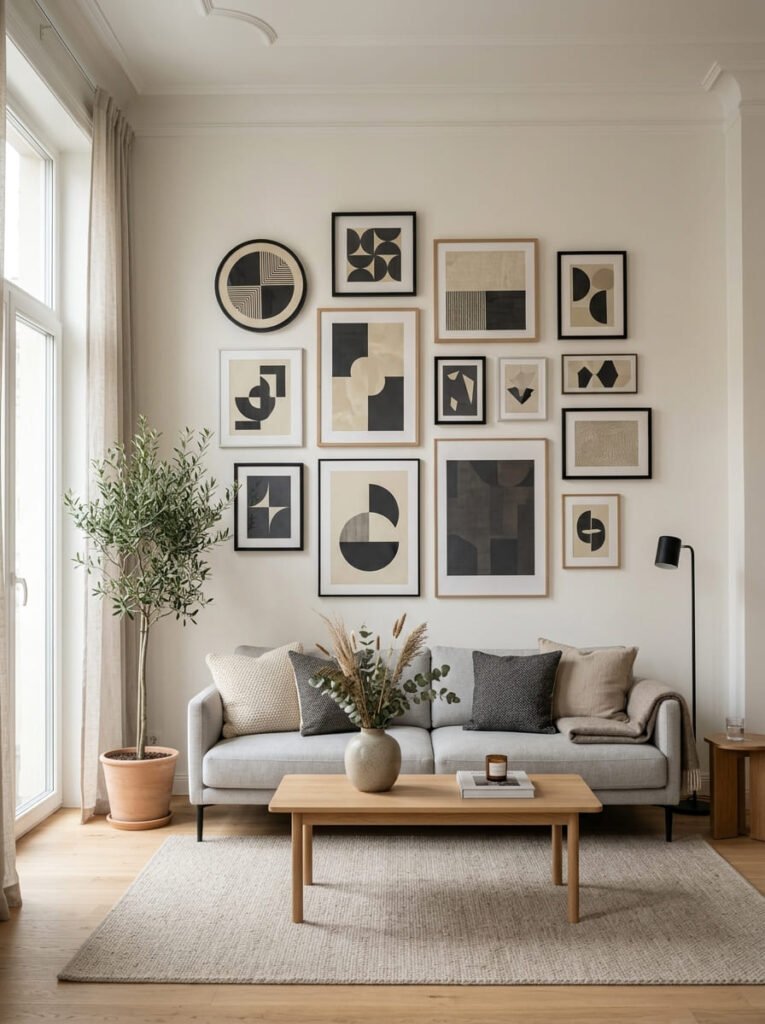
Geometric frames and artwork can give a living room gallery wall a structured, contemporary appearance. Mix circular, square, rectangular, or unusual-shaped pieces to create movement instead of relying on a traditional grid of identical frames.
Pair the shapes with abstract artwork or bold graphic prints for a modern effect. This approach works especially well with contemporary, Scandinavian, or industrial interiors where clean lines and intentional shapes already play an important role.
| Element | Effect |
|---|---|
| Geometric frames | Adds structure |
| Abstract artwork | Creates visual energy |
9. Travel-Inspired Gallery Wall for Meaningful Memories
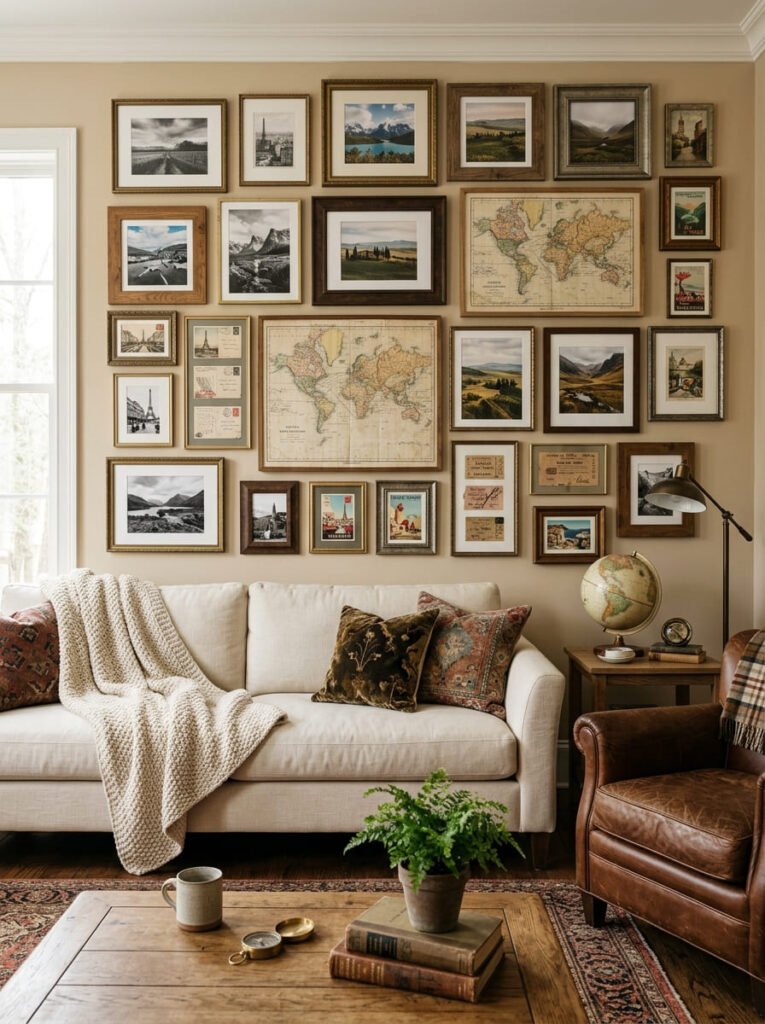
A travel-inspired gallery wall turns favorite adventures into part of the living room décor. Framed travel photographs, maps, postcards, tickets, and small souvenirs can create a display that feels personal while adding visual interest to an otherwise empty wall.
Rather than using generic travel artwork, include pieces connected to places you have actually visited. Mixing old tickets with photographs and maps gives the arrangement a collected travel-journal feeling instead of making it look like a themed decoration.
The One Thing to Remember
Real travel memories make the wall feel like a personal story, not just themed decor.
10. Abstract Art Gallery Wall for a Bold Statement
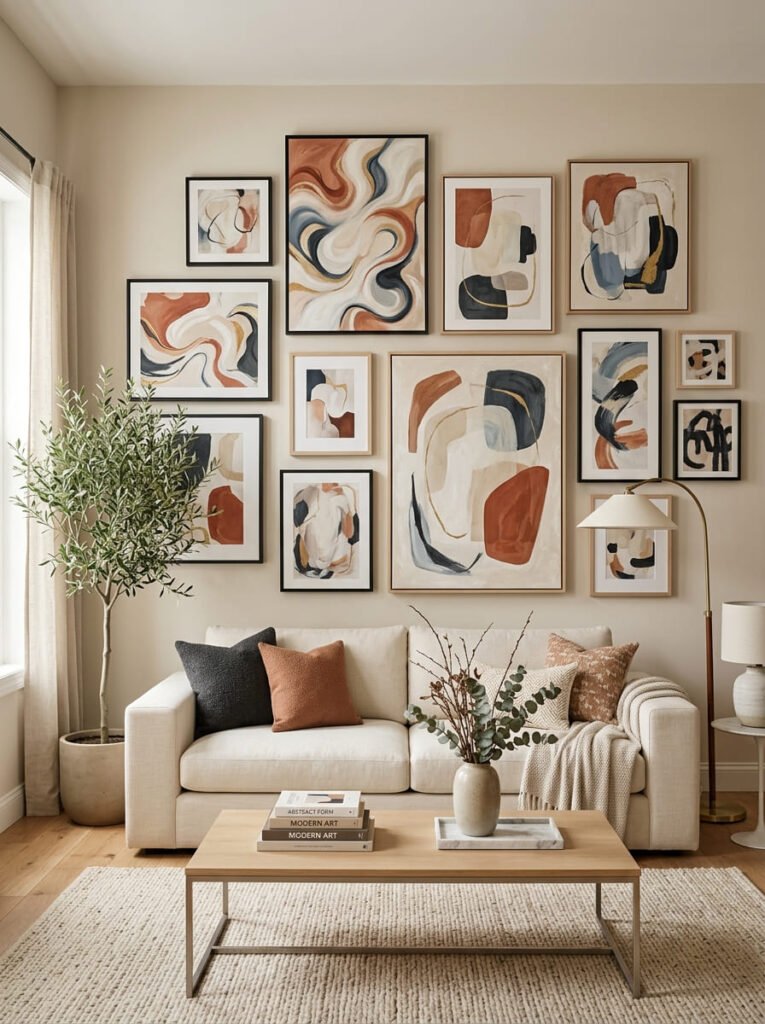
Abstract artwork can give a living room gallery wall instant personality through expressive colors, fluid shapes, and unusual compositions. Several abstract pieces can work together even when their subjects are completely different, especially when they share a few complementary colors.
Keep the surrounding furniture and accessories relatively simple so the artwork remains the focal point. A neutral sofa, understated rug, and minimal coffee table can provide the calm background needed for colorful or dramatic artwork.
Best Approach
- Choose a few shared accent colors.
- Let the artwork remain the main focal point.
- Keep surrounding decor relatively simple.
11. Minimalist Gallery Wall with Clean Lines
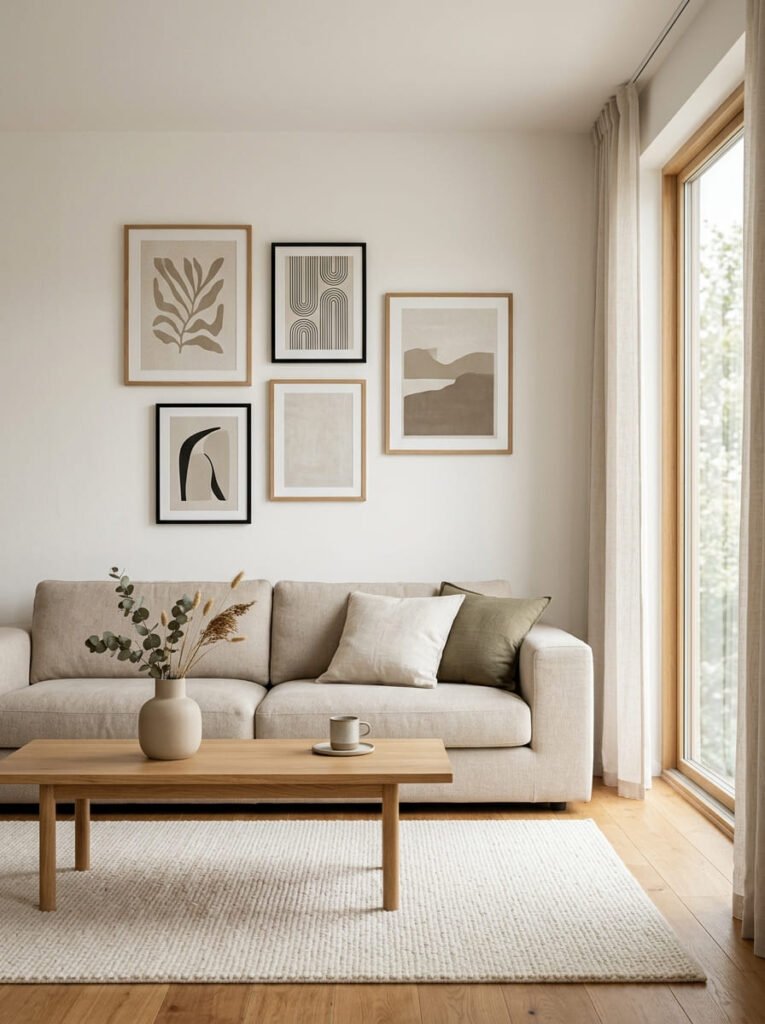
A minimalist gallery wall proves that a few carefully selected pieces can have more impact than a crowded arrangement. Choose simple artwork, subtle photography, or understated typography in neutral shades and give each piece enough breathing room.
Use matching or closely related frames to maintain the clean aesthetic. This style is particularly effective above a modern sofa because the restrained artwork adds interest without competing with the furniture, lighting, or other decorative elements in the room.
Frames
Simple, neutral, streamlined
Pieces
Few, carefully selected
Feel
Calm, refined, uncluttered
12. Pop Art Gallery Wall for a Fun, Vibrant Look
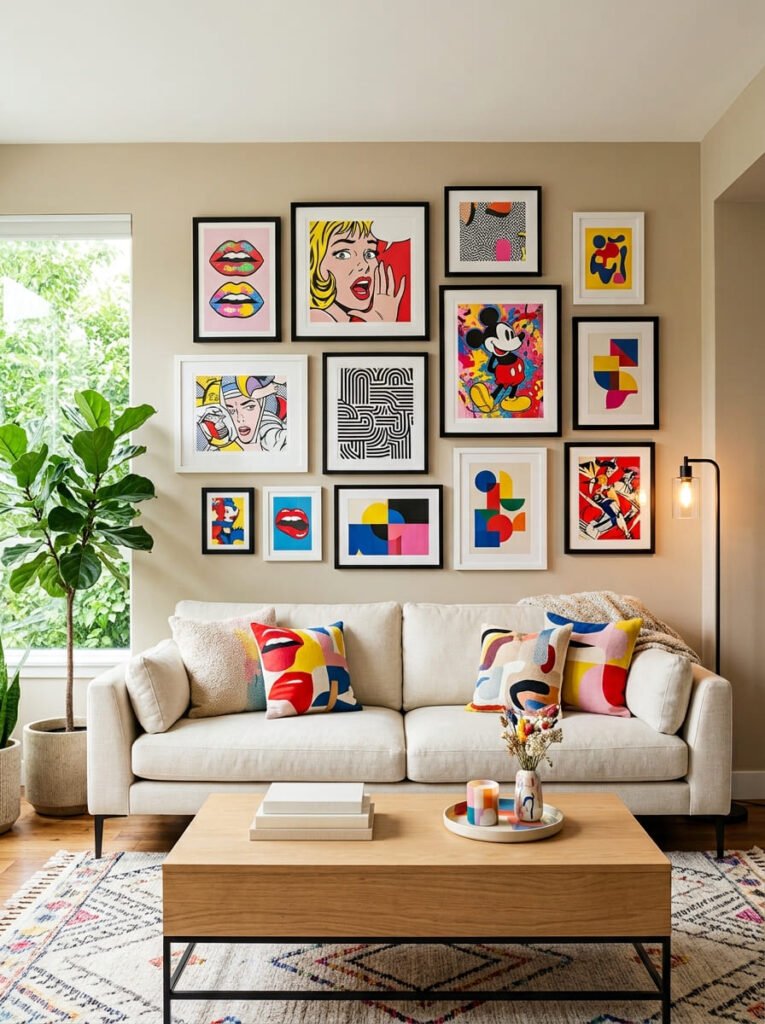
A pop art gallery wall brings playful energy into the living room through bold colors, graphic illustrations, comic-inspired artwork, and recognizable visual motifs. It is a good choice when you want the wall to become an immediate conversation piece rather than blend quietly into the background.
Because the artwork is naturally attention-grabbing, keep the rest of the room more controlled. Neutral furniture and simple accessories allow the colorful gallery wall to stand out without making the entire space feel visually overwhelming.
Quick Tip
Save this style for a casual, fun living room where bold artwork can become the main focal point.
13. Wall of Typography for Statement Quotes
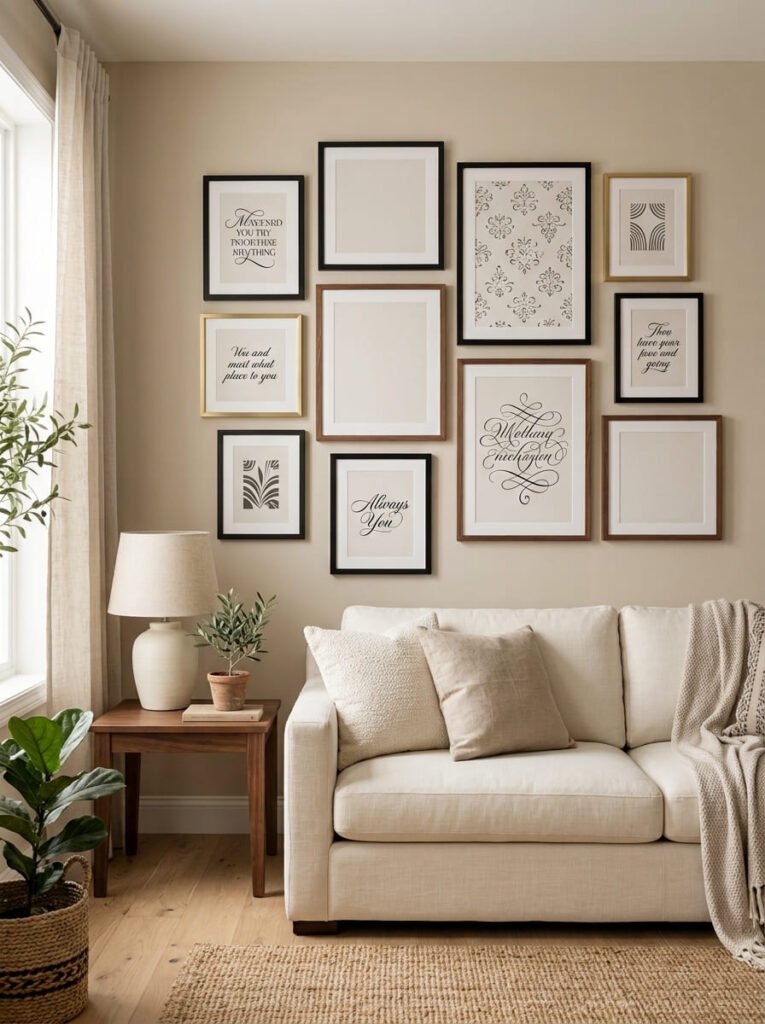
Typography prints can turn a gallery wall into a display centered around words, whether you prefer motivational phrases, funny sayings, or meaningful literary quotes. Mixing typography with simple artwork can make the arrangement feel more personal and conversational.
Use different font styles, print sizes, and frame shapes to create visual rhythm. Keeping a consistent color palette will stop the different lettering styles from feeling chaotic and helps the wall work naturally with the rest of the living room.
Matching Fonts
Can make the arrangement feel flat.
Mixed Fonts and Sizes
Create character and visual rhythm.
14. Coastal-Inspired Gallery Wall for a Breezy Feel
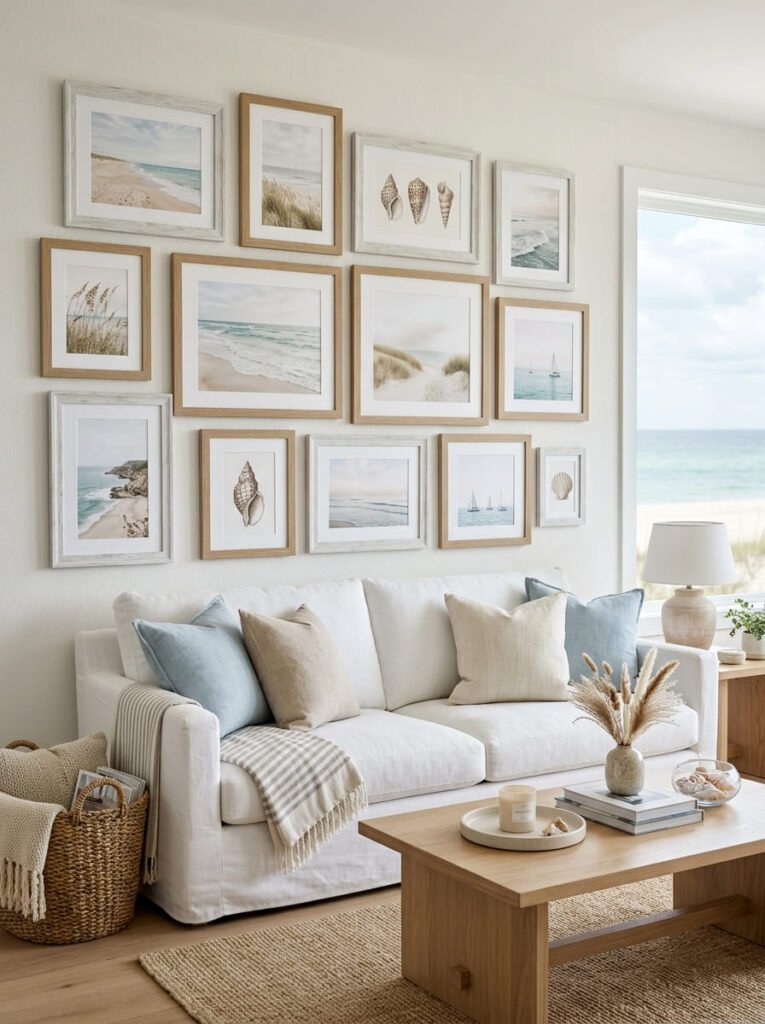
Coastal artwork can bring the relaxed atmosphere of the beach into a living room through ocean photography, seaside landscapes, shell illustrations, and nautical-inspired prints. Soft blues, sandy beige, and white keep the display feeling light and refreshing.
Choose weathered wood, whitewashed, or natural frames to strengthen the coastal character. This style works particularly well with linen sofas, woven accessories, light wood furniture, and rooms that already receive plenty of natural sunlight.
Building the Coastal Feel
- Beach, ocean, or shell-inspired artwork.
- Weathered or whitewashed frames.
- Soft blue, white, and sandy-neutral tones.
15. Industrial-Inspired Gallery Wall for a Bold Look
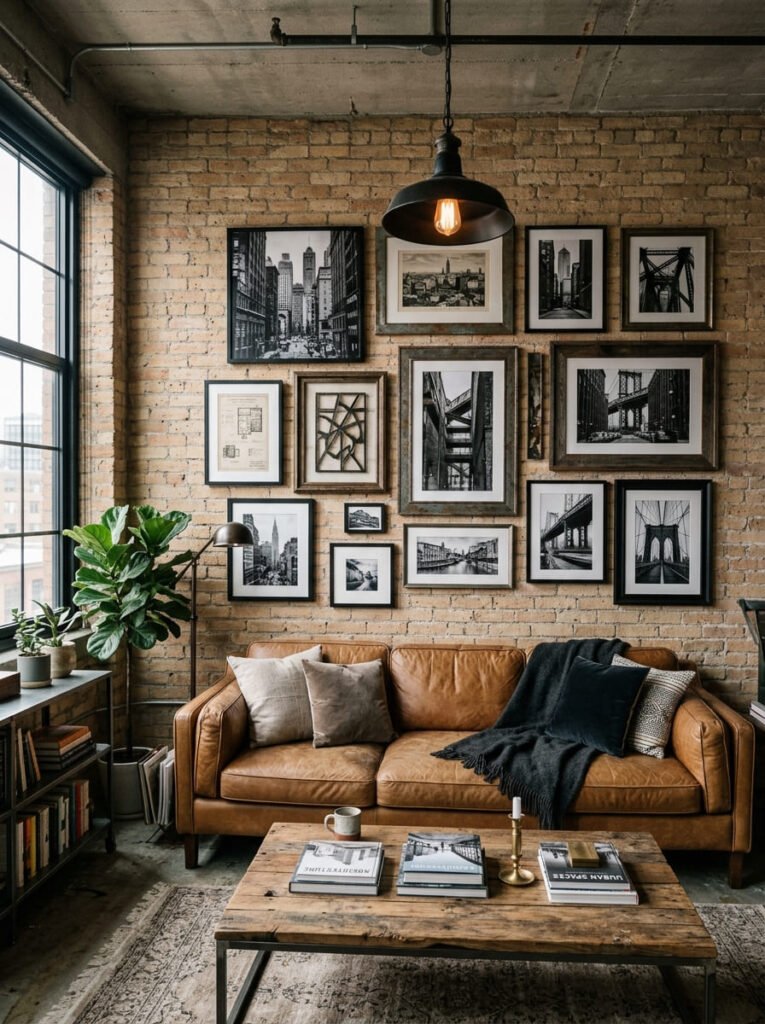
An industrial gallery wall combines raw materials and urban artwork to create a stronger, more dramatic living room focal point. Black-and-white photography, vintage signs, architectural prints, and metal artwork work especially well with exposed brick or concrete surfaces.
Mix metallic frames with dark wood to soften the industrial character while keeping the arrangement sophisticated. Leather seating, black lighting, and natural wood furniture can reinforce the theme without making the room feel excessively harsh.
Frames
Metallic and dark wood
Backdrop
Exposed brick or concrete
Pairs With
Leather, wood, industrial lighting
16. Watercolor Art Gallery Wall for Soft, Dreamy Vibes
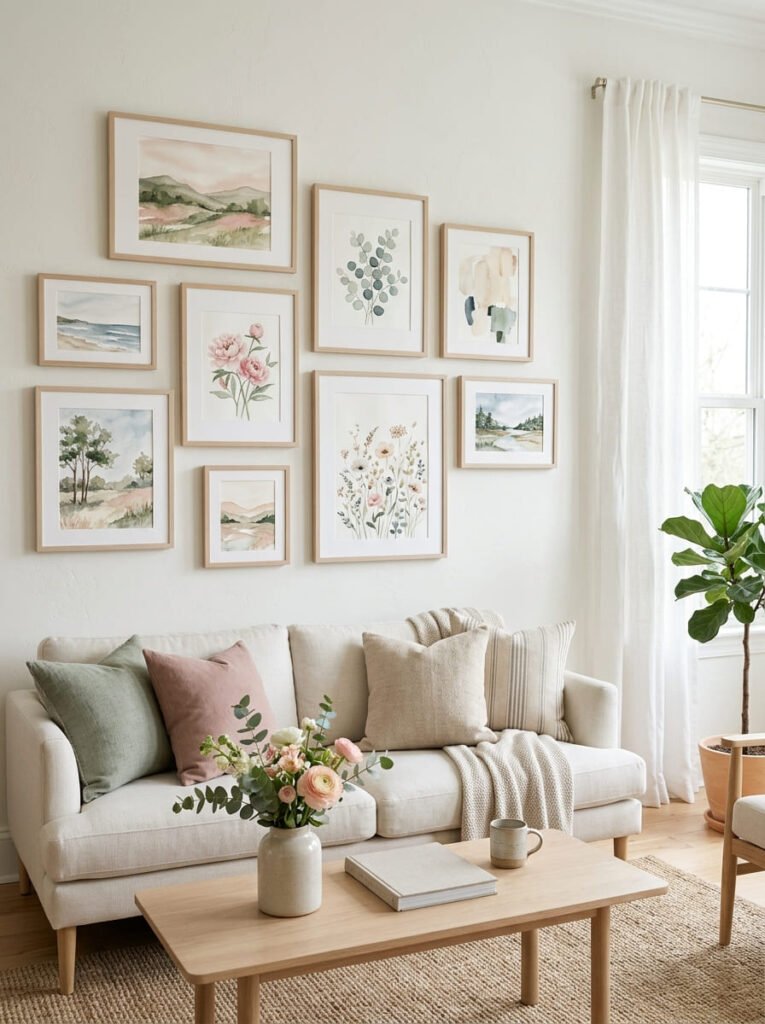
Watercolor artwork brings a softer quality to a gallery wall through delicate brushstrokes, translucent color, and organic shapes. Floral paintings, gentle landscapes, and abstract watercolor pieces can create a calm display that feels especially suitable for bright living rooms.
Choose artwork with related pastel tones such as blush, sage, dusty blue, cream, or soft peach. Simple frames and plenty of breathing room will preserve the airy quality instead of making the arrangement feel crowded.
3 Easy Steps
- Choose soft pastel watercolor prints.
- Mix florals, landscapes, and abstracts.
- Keep the room’s palette calm and light.
17. Framed Fabric and Textiles for Added Texture
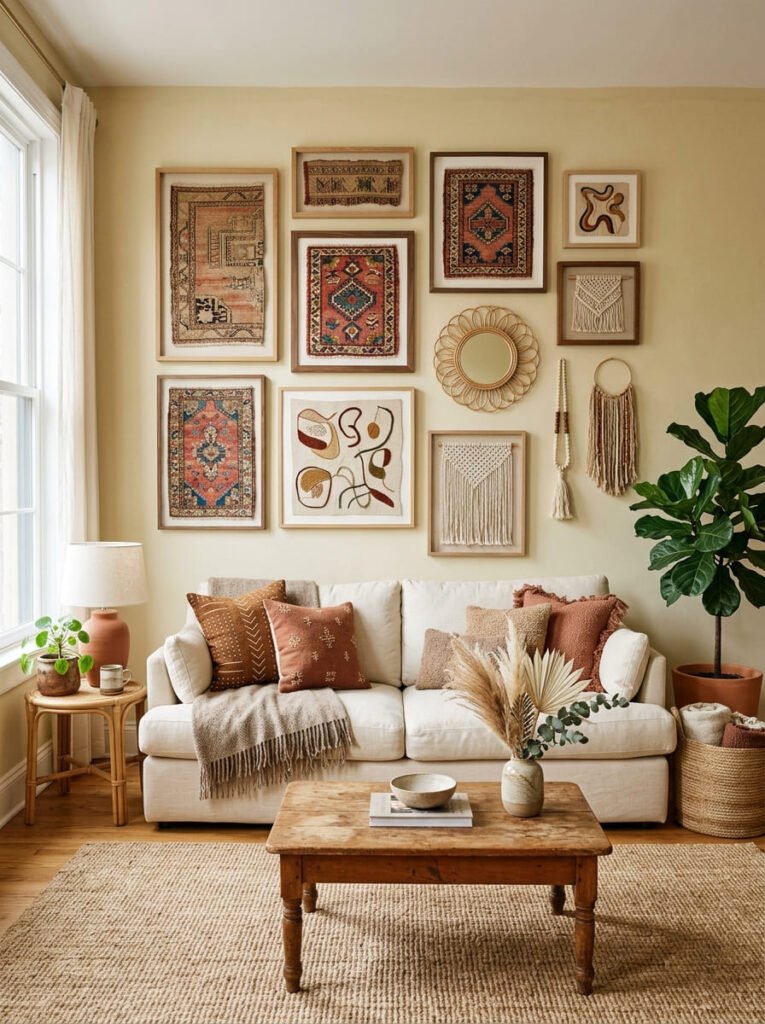
Framed textiles offer an unusual alternative to traditional prints and photographs, bringing softness and tactile depth to the living room wall. Woven fabrics, embroidery, vintage textiles, and handmade patterns can make the arrangement feel warmer and more handcrafted.
This idea works particularly well in boho, earthy, or relaxed interiors where natural materials already play an important role. Leave enough space around textured pieces so their patterns and dimensional surfaces remain easy to appreciate.
Do This
- Frame woven or embroidered textiles.
- Pair them with earthy, handmade decor.
Skip This
- Overly sleek surroundings that compete with the texture.
- Tight framing that hides the fabric’s dimensional quality.
18. Monochrome Photography for a Chic, Unified Theme
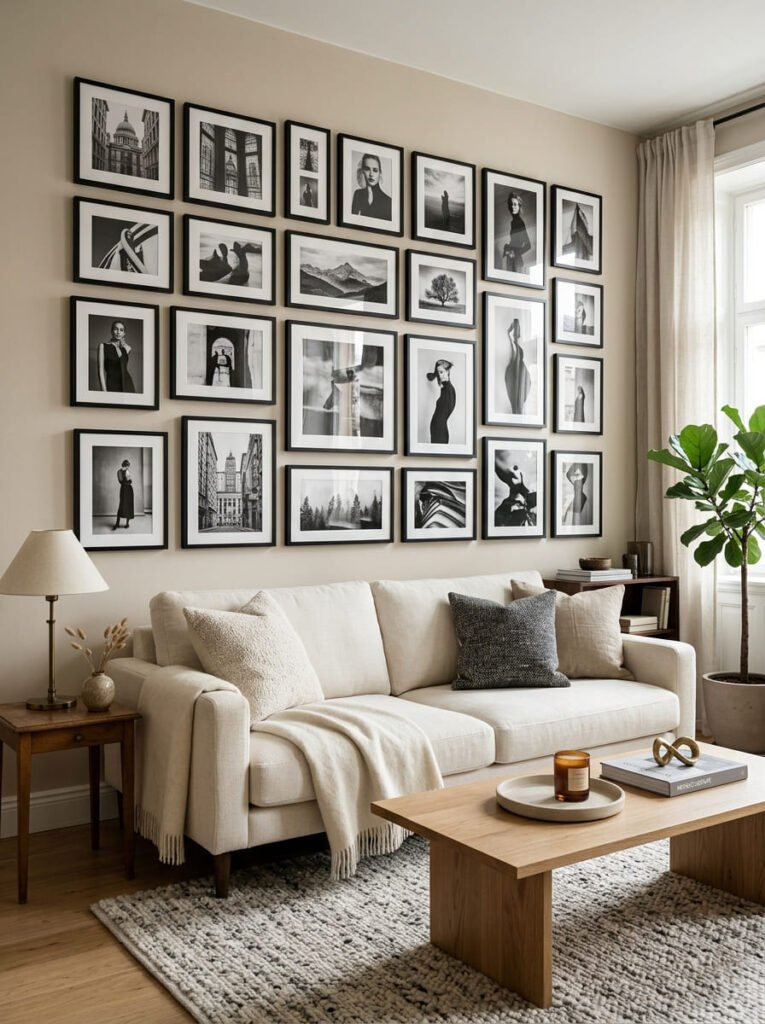
Black-and-white photography creates a polished gallery wall because every image shares the same visual language. Mix portraits, architecture, landscapes, fashion photography, or everyday scenes while keeping the photographs within a consistent monochrome palette.
Use matching black frames for a particularly refined effect, or introduce subtle variations in frame thickness for more dimension. This style works beautifully above a neutral sofa where the photographs can provide contrast without introducing competing colors.
Palette
Black, white, and soft gray
Effect
Chic, cohesive, sophisticated
Why Gallery Walls Work So Well in Living Rooms
Gallery walls work because they combine decoration with personality. Instead of leaving a large wall empty, you can use artwork, photographs, mirrors, and meaningful objects to create a focal point that reflects your style.
The biggest advantage is flexibility. You can build a gallery wall around a specific color palette, mix different frame styles, or create a completely personal collection. The important thing is maintaining some connection through color, spacing, subject matter, or framing.
THE ONE THING TO REMEMBER
A gallery wall feels intentional when different pieces share at least one visual connection.
Tips for Creating the Perfect Gallery Wall
A few simple planning steps can make the finished arrangement look much more polished.
Plan Before Hanging
Lay all your frames on the floor first and experiment with different arrangements before putting anything on the wall.
Keep Spacing Consistent
Around 2–3 inches between frames is a useful starting point for creating a connected but uncluttered arrangement.
Create a Visual Anchor
Use one larger artwork, photograph, or mirror as the main piece and arrange smaller items around it.
Match the Room’s Palette
Pull one or two colors from your sofa, rug, curtains, or accessories into the artwork so the gallery wall feels connected to the room.
Mix Frames Carefully
Different frame styles can look beautiful together, but repeating one finish, color, or material helps keep the collection cohesive.
Think About Height
Centering the overall gallery arrangement around eye level generally makes the display feel more natural and comfortable to view.
Final Thoughts
Creating a gallery wall is one of the easiest ways to give a living room personality while making an empty wall feel intentional. From minimalist artwork and monochrome photography to family memories, textiles, mirrors, and colorful abstract pieces, there is no single formula that works for every home.
The key is choosing pieces you genuinely like and finding a visual connection between them. Consider your room’s colors, furniture, wall size, and overall style before arranging everything, then give the display enough breathing room to feel balanced rather than crowded.
Frequently Asked Questions
How do I plan a gallery wall before hanging it?
Lay the frames and artwork on the floor first and test several arrangements. Once you find a layout you like, photograph it or use painter’s tape to mark the approximate positions on the wall.
How much space should I leave between gallery wall frames?
Around 2–3 inches is a good starting point for most arrangements. Keeping the spacing relatively consistent helps separate individual pieces while making the entire collection feel like one display.
Do gallery wall frames have to match?
No. Mixing wood, black, brass, or vintage frames can create more personality. To keep the arrangement cohesive, repeat at least one element such as color, spacing, frame material, or artwork style.
What should be the main focal point of a gallery wall?
A larger artwork, family photograph, mirror, or distinctive decorative piece can work as the focal point. Arrange smaller pieces around it to create visual balance without making every item compete for attention.
Should a gallery wall match the living room decor?
It does not need to match perfectly, but repeating colors or materials from the living room helps the wall feel connected to the existing design. Use the sofa, rug, curtains, or accessories as inspiration for your artwork palette.