24 Blue Room Ideas for a Calm and Stylish Space
Blue can completely change the feeling of a room, from soft and airy to rich and dramatic. The right shade can make a bedroom feel restful, give a living room more character, or bring a fresh coastal mood to a bright space. The key is choosing the blue according to the room’s natural light, existing materials, and the atmosphere you want to create.
These blue room ideas explore different shades, textures, furniture styles, and decorating approaches so you can find a look that feels right for your home. Whether you prefer pale powder blue, deep navy, vibrant turquoise, or sophisticated sapphire, thoughtful combinations of warm wood, cream, brass, natural fibers, and layered textiles can keep the color balanced and inviting.
1. Soft Powder Blue Bedroom with Layered Neutrals
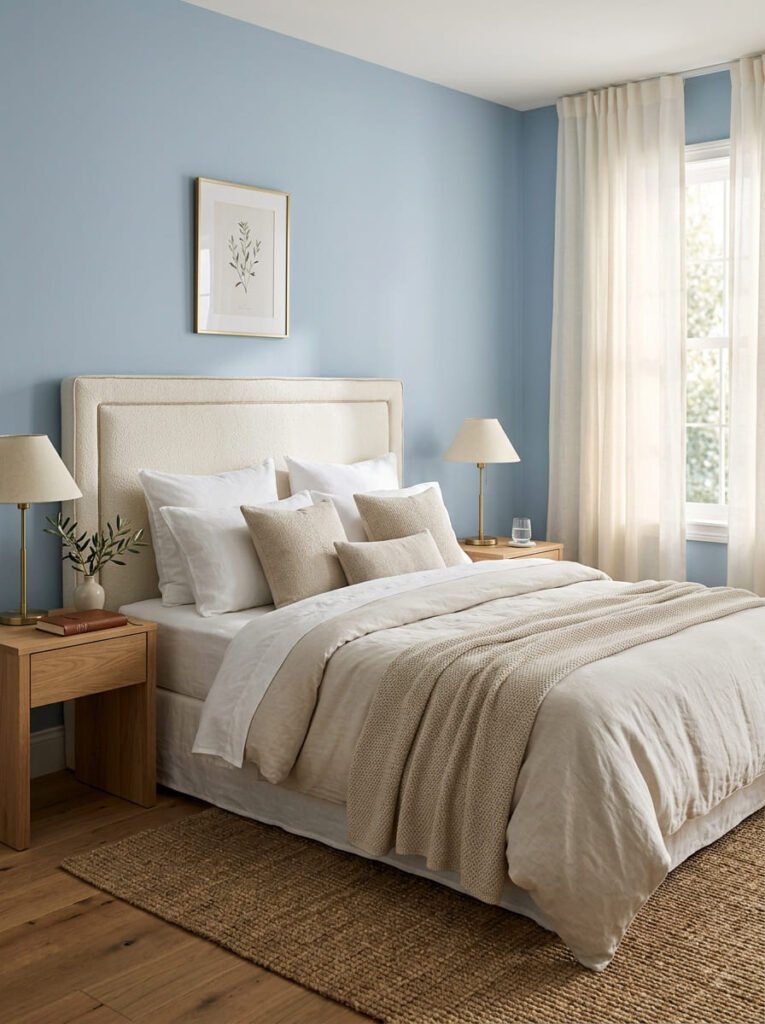
Soft powder blue walls create a peaceful bedroom backdrop that feels light without becoming overly cold. Pair the color with an upholstered cream headboard, crisp white bedding, and beige or oatmeal textiles to create gentle contrast while keeping the room visually calm.
Bring warmth through natural wood nightstands, woven baskets, or a textured jute rug. Small brass details on lamps or hardware can add subtle sophistication, while sheer curtains allow daylight to enhance the airy blue without making the space feel too busy.
Color Palette
Powder blue + cream + warm beige + natural wood
Best Detail
Use layered neutral textures to soften the cool blue walls.
2. Navy Blue Living Room with Warm Wood Accents
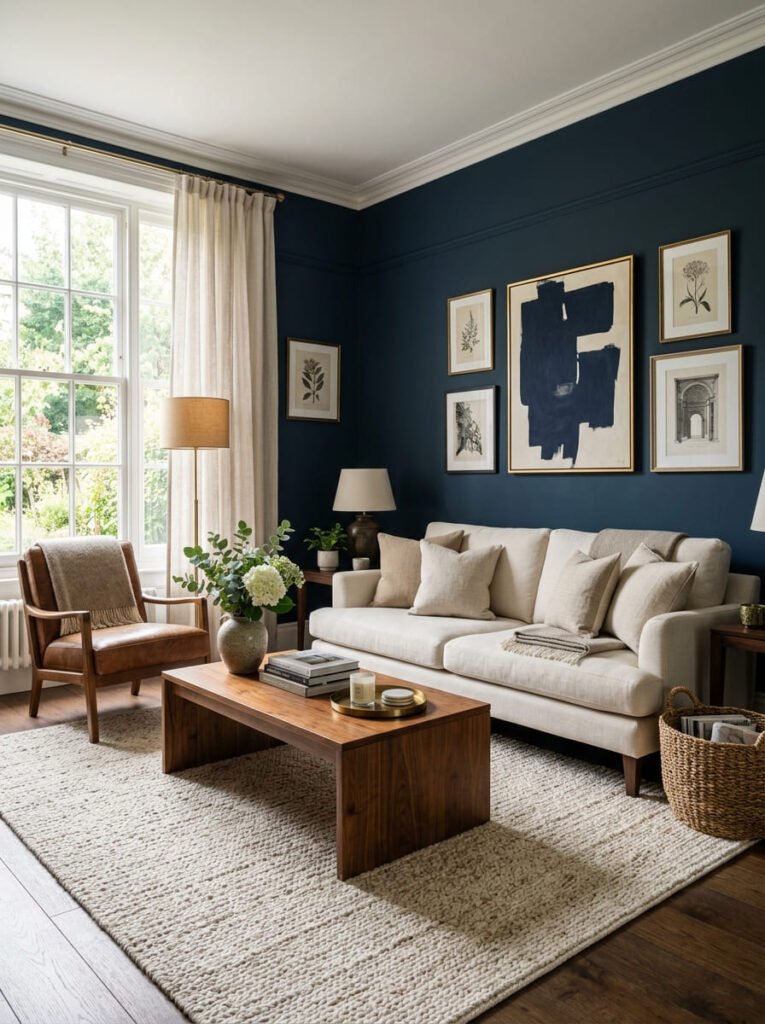
Deep navy walls can give a living room a rich, sophisticated foundation, especially when balanced with warm materials. A comfortable cream sofa, walnut coffee table, and cognac leather accent chair keep the darker blue from feeling too heavy.
Add woven baskets, textured cushions, and a large neutral rug to introduce softness. Brass lighting or framed artwork can provide small warm highlights against the navy, creating a living room that feels polished while remaining comfortable enough for everyday use.
Balance the Dark Blue
| Element | Purpose |
|---|---|
| Navy walls | Rich focal color |
| Warm wood | Adds natural warmth |
| Cream sofa | Lightens the room |
| Brass accents | Creates subtle contrast |
3. Coastal Blue and White Bedroom
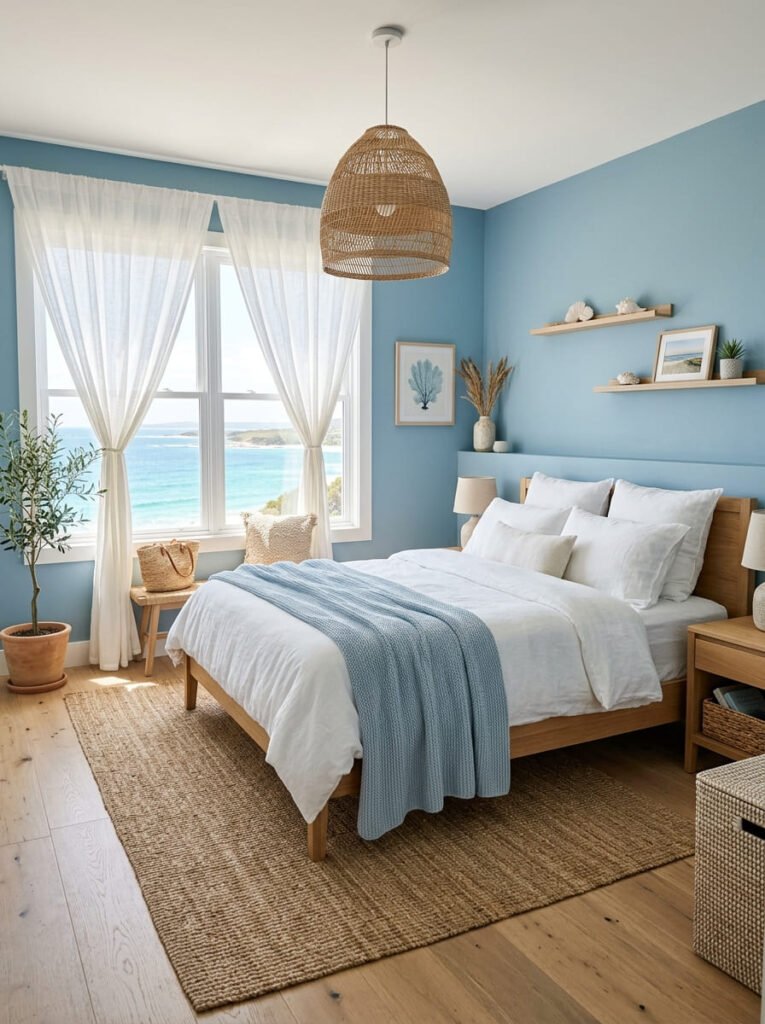
A blue and white bedroom can create an effortless coastal atmosphere without relying on obvious beach decorations. Use a soft ocean blue on the walls or bedding, then layer crisp white linens, light wood furniture, and natural woven textures for a breezy look.
Keep the styling simple with a rattan pendant, linen curtains, and a few understated botanical accents. Pale blue works especially well in rooms with generous natural light because it reflects brightness and keeps the overall bedroom feeling fresh and relaxed.
Coastal Essentials
- Soft ocean blue
- Crisp white bedding
- Light wood
- Rattan texture
- Linen fabrics
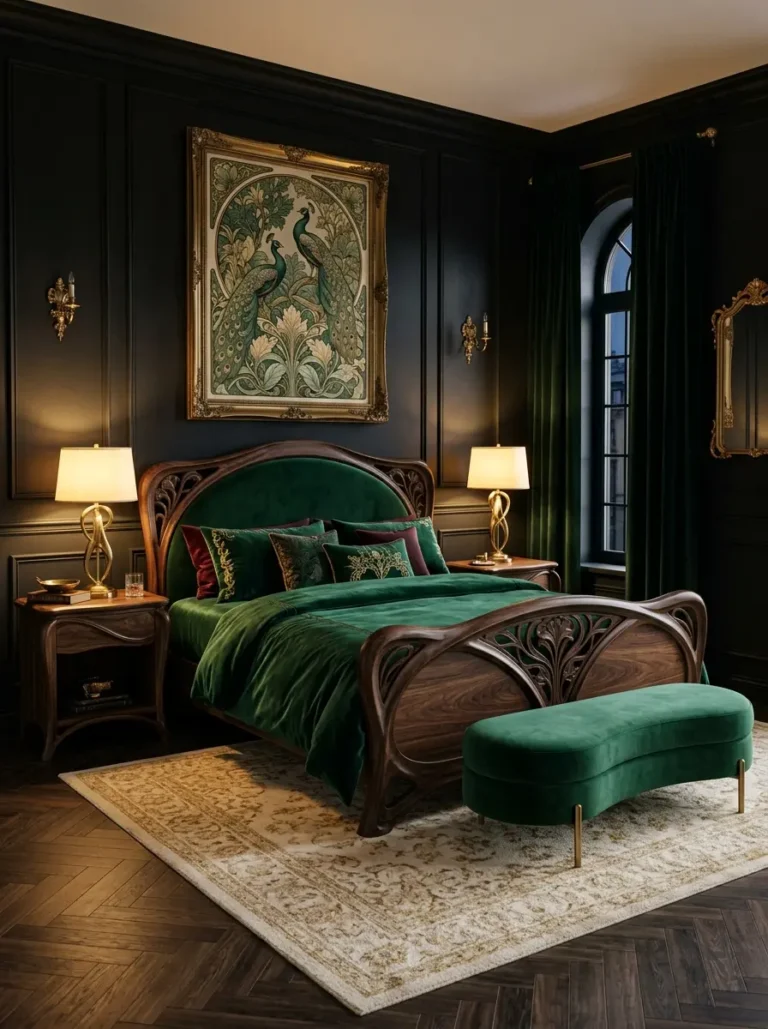
4. Moody Midnight Blue Bedroom with Brass Details
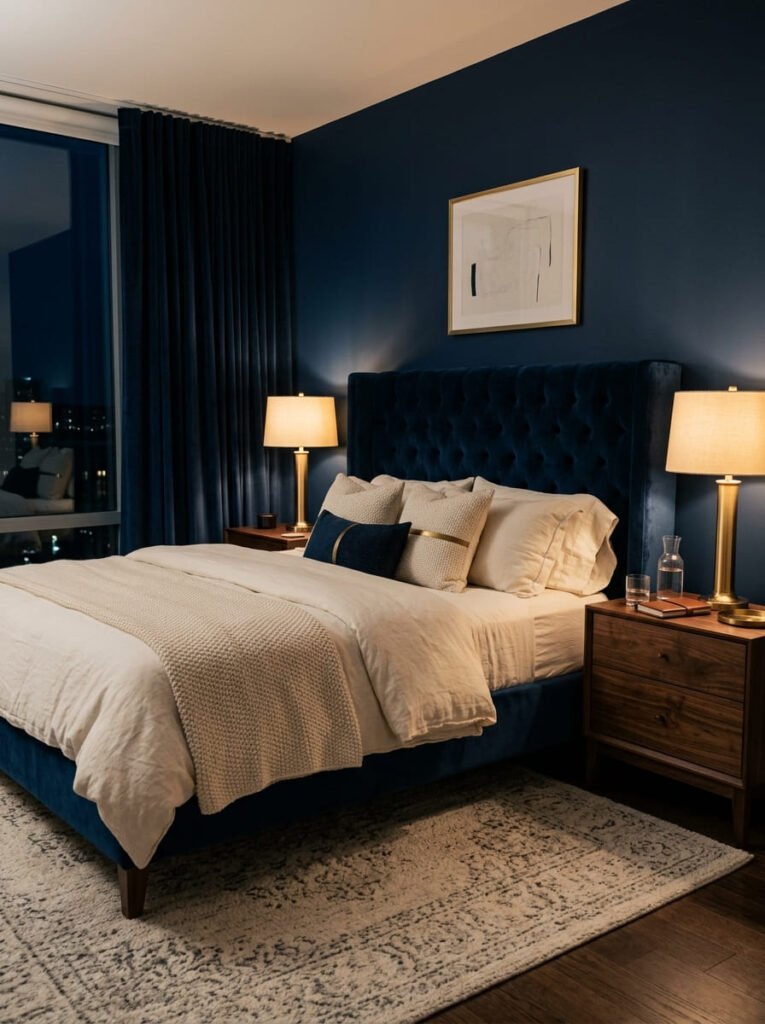
Midnight blue can create a dramatic bedroom that feels intimate and luxurious rather than gloomy. Use the deep shade across the walls, then introduce lighter bedding, warm brass lighting, and natural wood to create enough contrast.
A velvet headboard or quilted bench can reinforce the sophisticated mood through rich texture. Keep artwork simple and allow the deep blue to remain the dominant feature, while warm bedside lamps provide a softer glow in the evening.
Best For
Bedrooms with good artificial lighting or generous natural light.
Warm It Up With
Brass, walnut wood, cream textiles, and soft amber lighting.
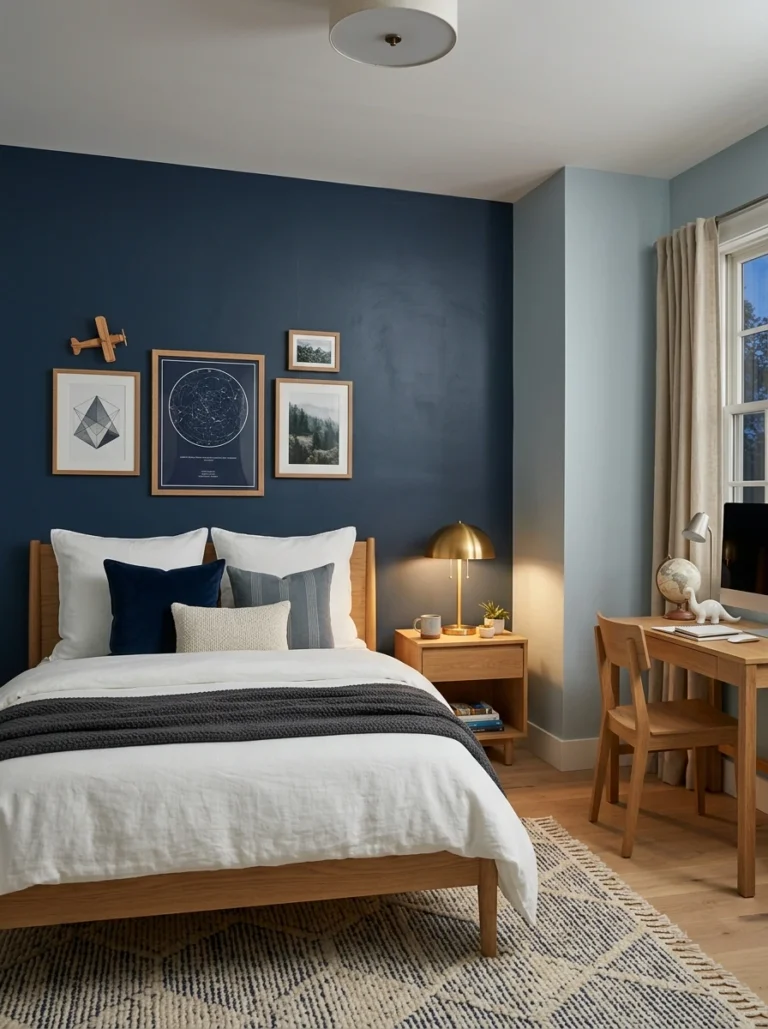
5. Blue Accent Wall with Neutral Furniture
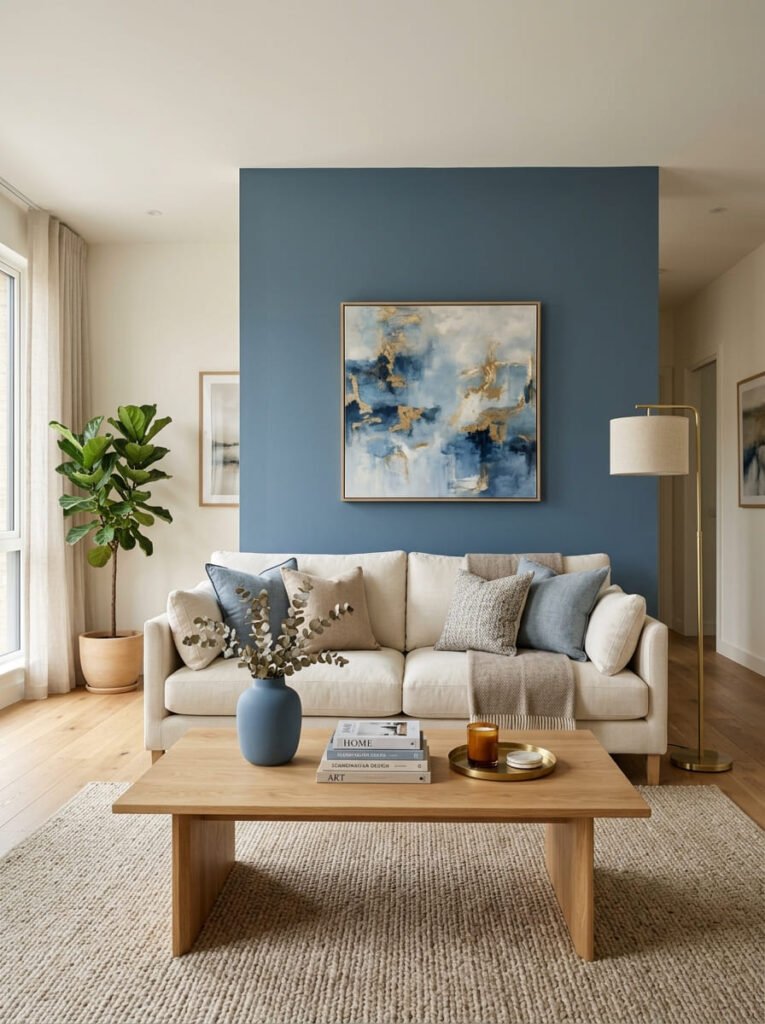
If painting an entire room blue feels too dramatic, an accent wall can deliver the color without overwhelming the space. Choose one strong focal wall behind a sofa, bed, desk, or dining table, then keep the remaining walls in a warm white or soft neutral.
Use furniture in cream, beige, natural wood, or light gray to let the blue wall stand out. A few coordinated blue accessories throughout the room can connect the accent wall to the rest of the design.
Simple Formula
One blue wall + neutral furniture + 2–3 blue accents
6. Light Blue Kitchen with Natural Wood
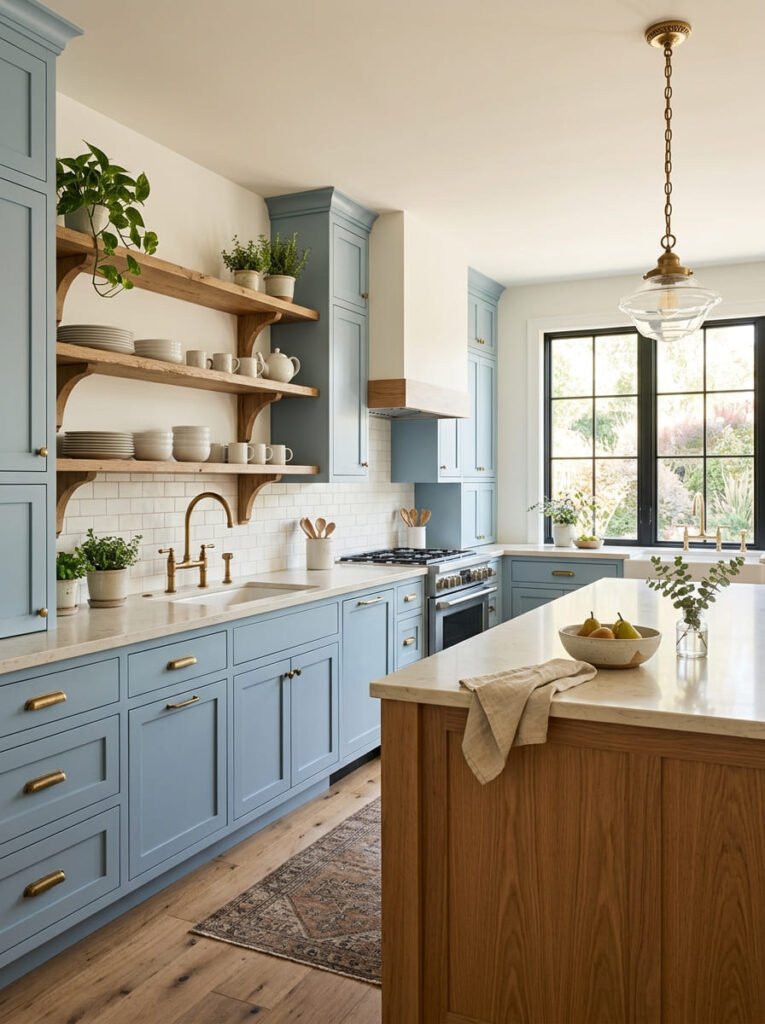
Light blue cabinetry can make a kitchen feel fresh and welcoming while still adding more personality than an all-white scheme. Choose a muted blue rather than an overly bright shade and pair it with warm natural wood to create a balanced, timeless palette.
White or cream countertops and backsplash surfaces keep the kitchen bright, while brushed brass or aged bronze hardware adds warmth. Open wood shelving can also soften the cabinetry and provide a place to display everyday ceramics.
Color Combination
Light blue cabinetry + warm wood + cream surfaces + brass hardware
7. Dusty Blue Home Office with Warm Wood
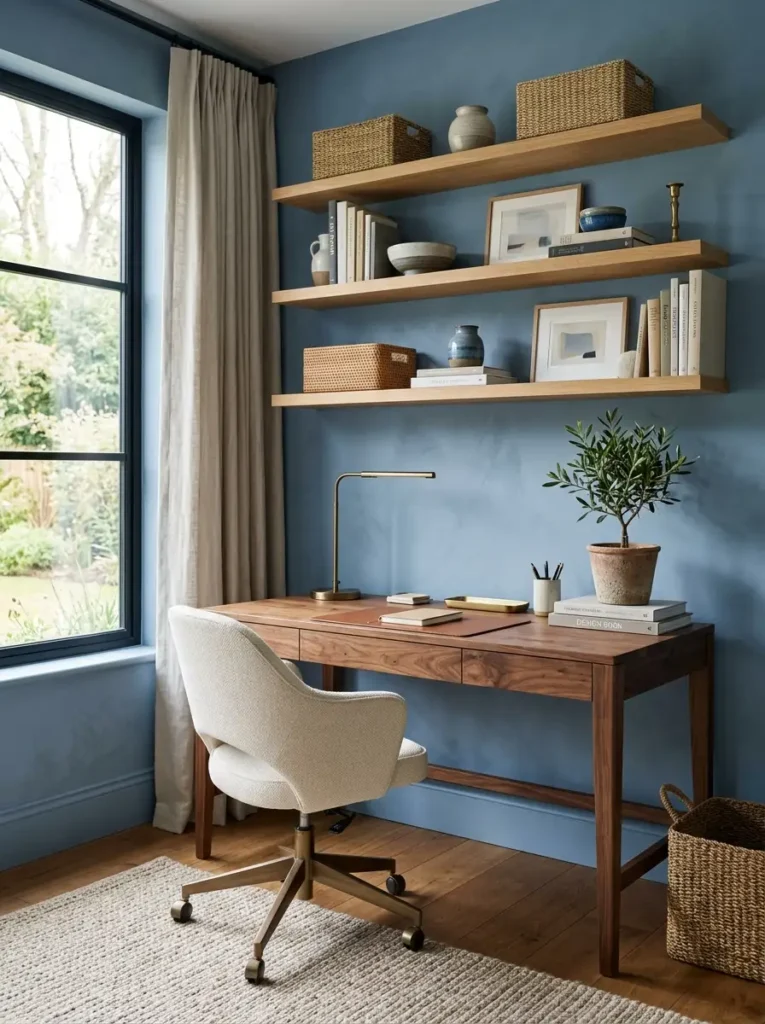
Dusty blue can make a home office feel calm without looking too plain. Use the shade on the walls behind a simple wood desk, then add a cream upholstered chair and warm timber shelving to create a comfortable workspace with natural contrast.
Keep the accessories restrained with woven storage, neutral stationery, and a small plant. Brass or bronze lighting can add warmth, while a textured rug underneath the desk helps make the workspace feel more finished and inviting.
Styling Formula
Dusty blue + warm wood + cream + greenery + subtle brass
8. Blue and Beige Dining Room with Elegant Contrast
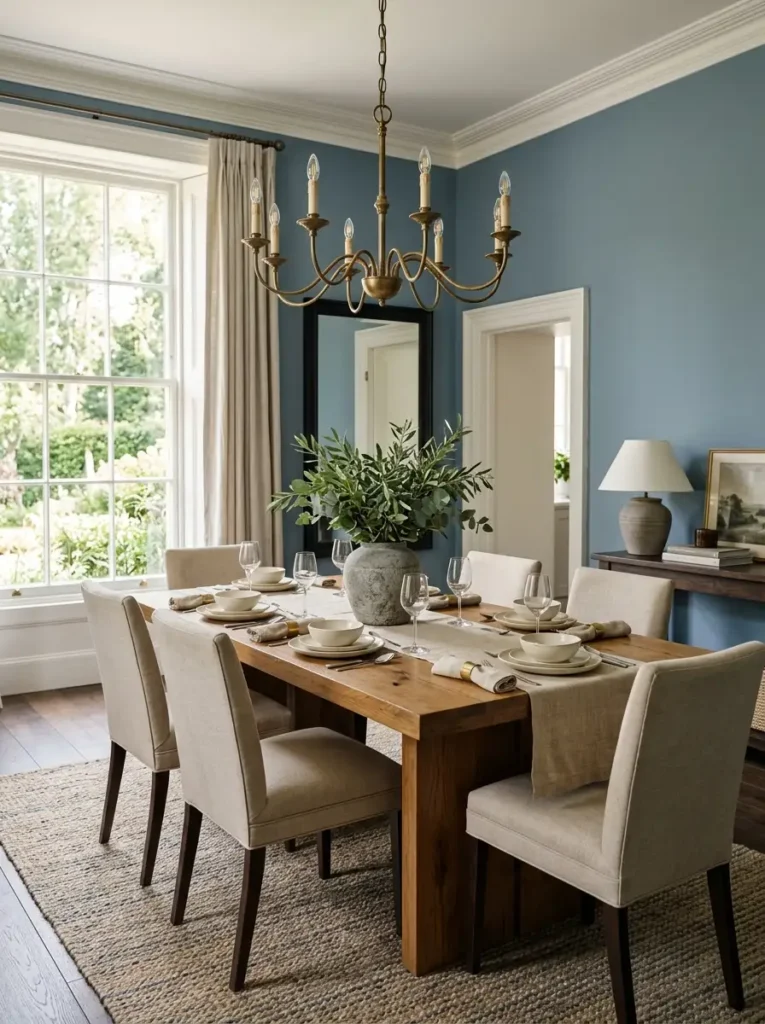
Blue and beige make a sophisticated combination for a dining room because the warm neutral tones soften the cooler color. Try muted blue walls with a natural wood dining table and upholstered beige chairs for a relaxed but polished foundation.
A woven pendant or aged brass chandelier can introduce warmth overhead. Keep table styling simple with cream ceramics, natural linen, and a small arrangement of greenery so the blue remains noticeable without dominating the dining space.
Color Pairing
Muted blue + beige + natural wood + aged brass
9. Deep Blue Bathroom with Spa-Like Details
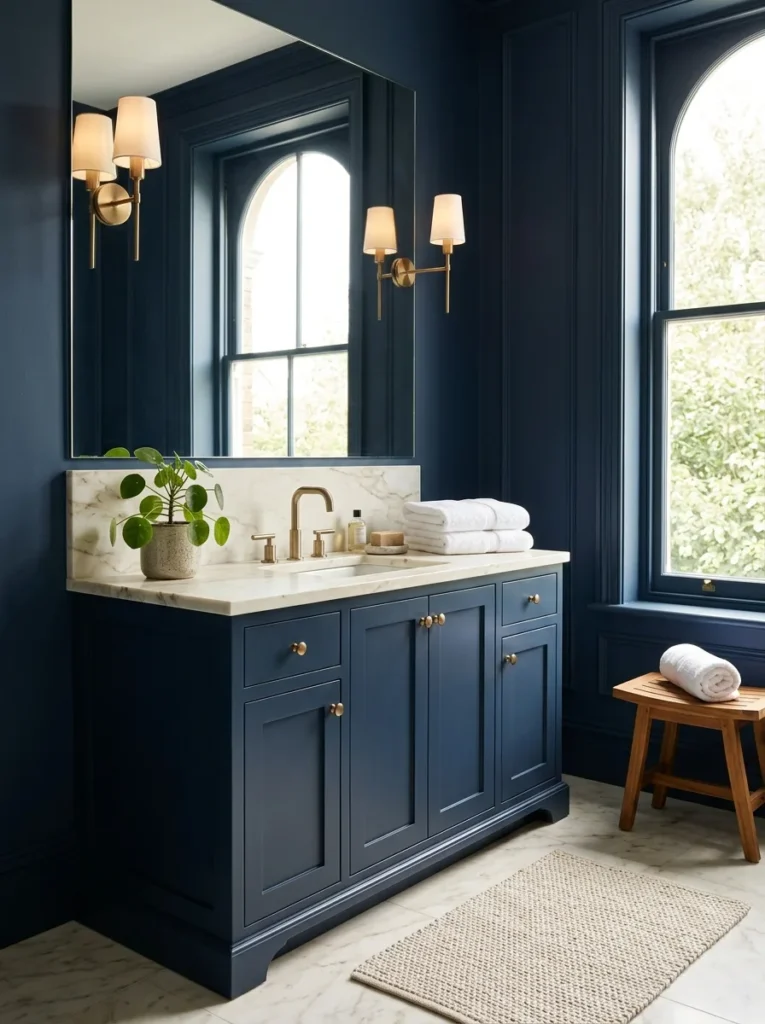
Deep blue can give a bathroom a luxurious, cocooning atmosphere when balanced with lighter surfaces and warm accents. Use navy or ink-blue cabinetry or walls alongside creamy stone, white towels, and simple polished fixtures.
Natural wood accessories can prevent the room from feeling overly cool, while brass hardware adds a refined highlight. Keep decorative items minimal and focus on tactile details such as folded towels, textured bath mats, and a small leafy plant.
Create a Spa Mood
- Layer plush white towels.
- Add warm wood accessories.
- Use soft brass or bronze hardware.
- Keep surfaces visually uncluttered.
10. Sky Blue Nursery with Soft Natural Accents
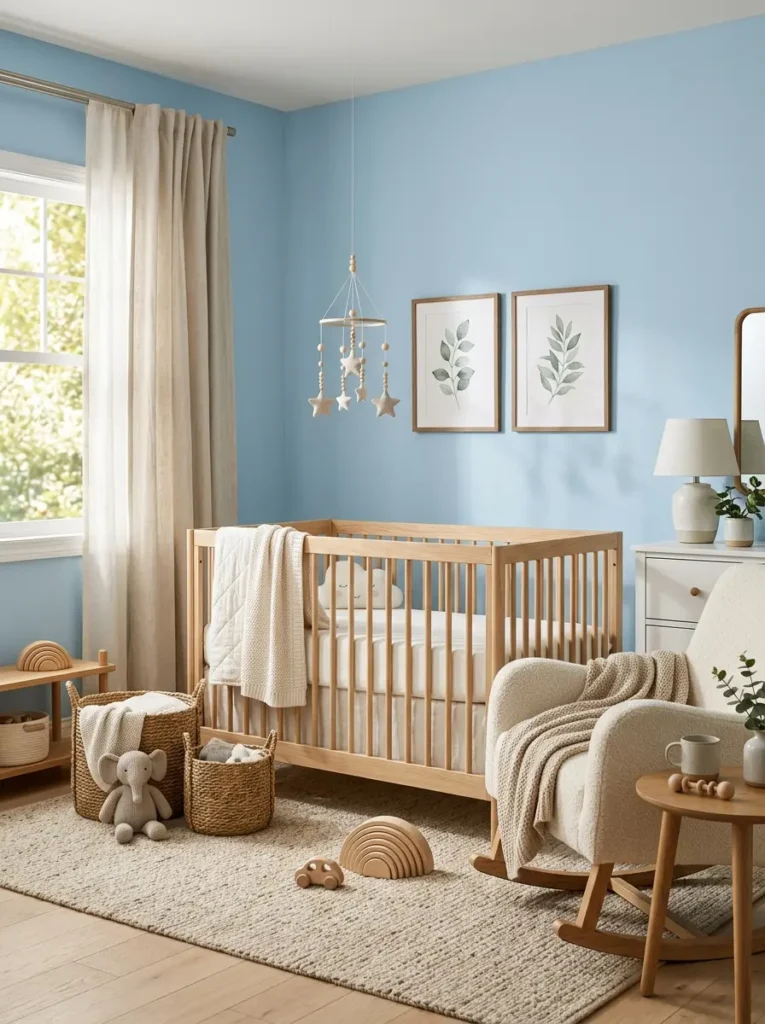
Sky blue creates an airy and peaceful nursery when paired with warm white and natural materials. Paint the walls a gentle blue and use a light wood crib, cream textiles, and woven storage to keep the room feeling soft and welcoming.
Avoid overly matching every accessory to the wall color. Instead, introduce small touches of beige, muted green, and natural wood to create variety while maintaining a soothing palette that can easily grow with the room.
Soft Palette
Sky blue + warm white + light wood + beige + muted green
11. Sapphire Blue Accent Furniture in a Neutral Room
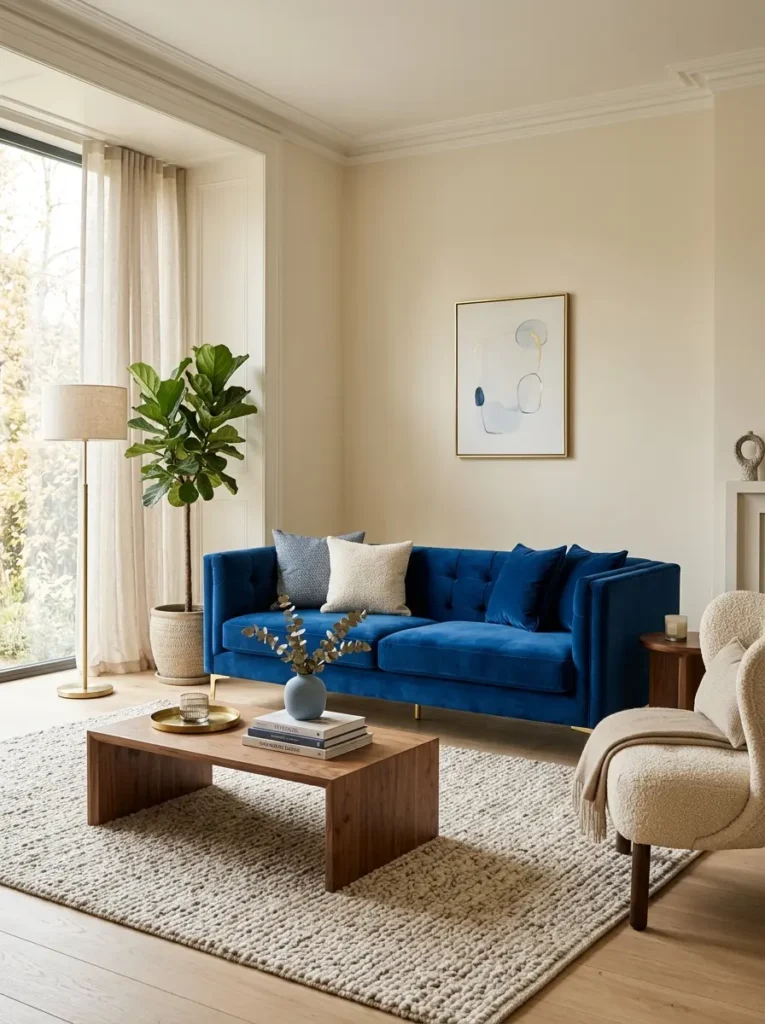
You do not always need blue walls to make the color the star. A sapphire blue sofa, armchair, cabinet, or upholstered bench can become a striking focal point against warm white, beige, or light gray surroundings.
Balance the bold furniture with natural wood, cream textiles, and restrained artwork. Repeat tiny touches of blue through cushions or ceramics rather than adding many competing colors, allowing the statement piece to remain the room’s strongest visual element.
The One Thing to Remember
Let one strong blue furniture piece lead the room, then repeat the shade subtly in smaller accessories.
12. Blue and Green Bedroom Inspired by Nature
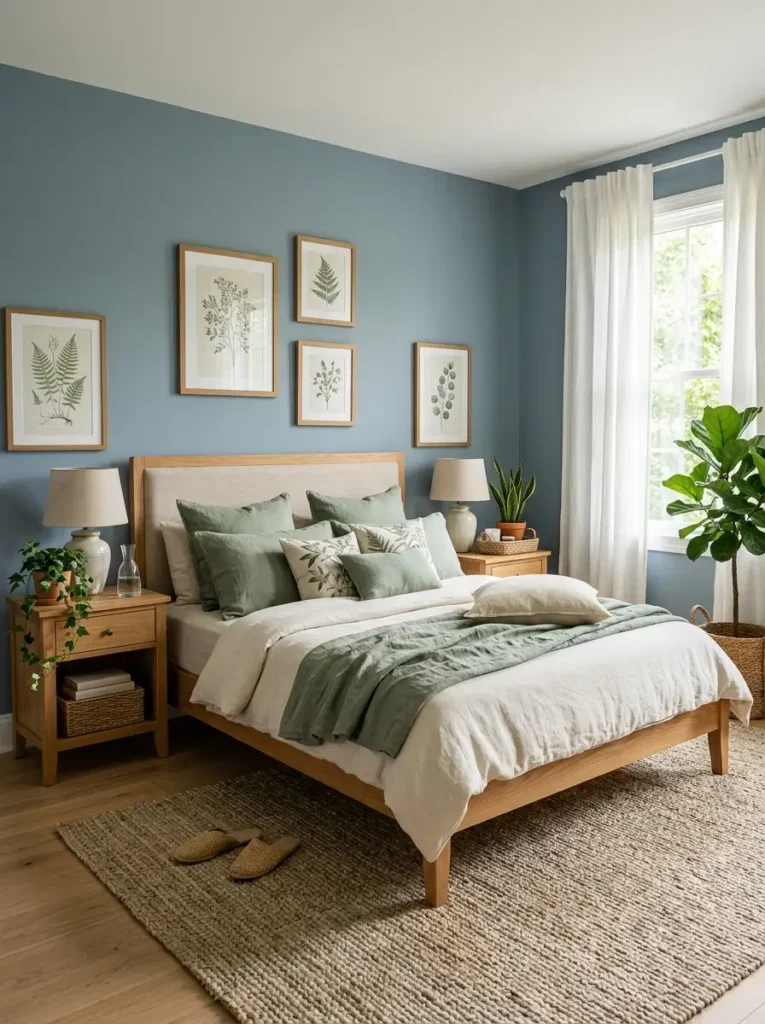
Blue and green can create a naturally relaxing bedroom when the shades are muted and layered thoughtfully. Pair dusty blue walls or bedding with sage green cushions, botanical artwork, and natural wood furniture for a fresh, organic atmosphere.
Use cream or warm white textiles to keep the palette from becoming too saturated. Plants, woven baskets, and linen fabrics can strengthen the connection to nature while adding enough texture to make the room feel comfortable and lived-in.
Natural Connection
Blue + sage green + warm white + natural wood + linen
13. Blue Velvet Living Room for a Luxe Look
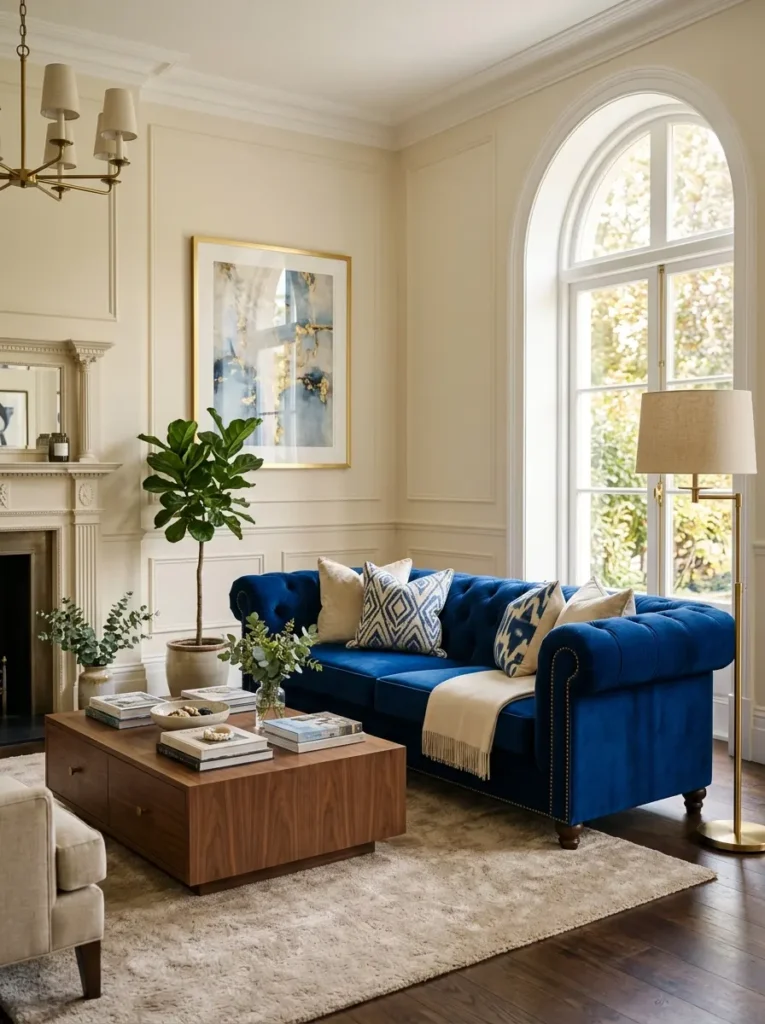
Blue velvet furniture can instantly add depth and luxury to a living room. A deep blue velvet sofa or pair of accent chairs works beautifully against warm cream walls, especially when combined with a neutral rug and natural wood furniture.
Keep the rest of the palette restrained so the velvet remains the star. Brass lighting, soft beige cushions, and a few carefully chosen decorative pieces can add warmth without competing with the rich blue upholstery.
Luxury Pairings
Blue velvet + cream + walnut + brass
14. Powder Blue Bathroom with Vintage Charm
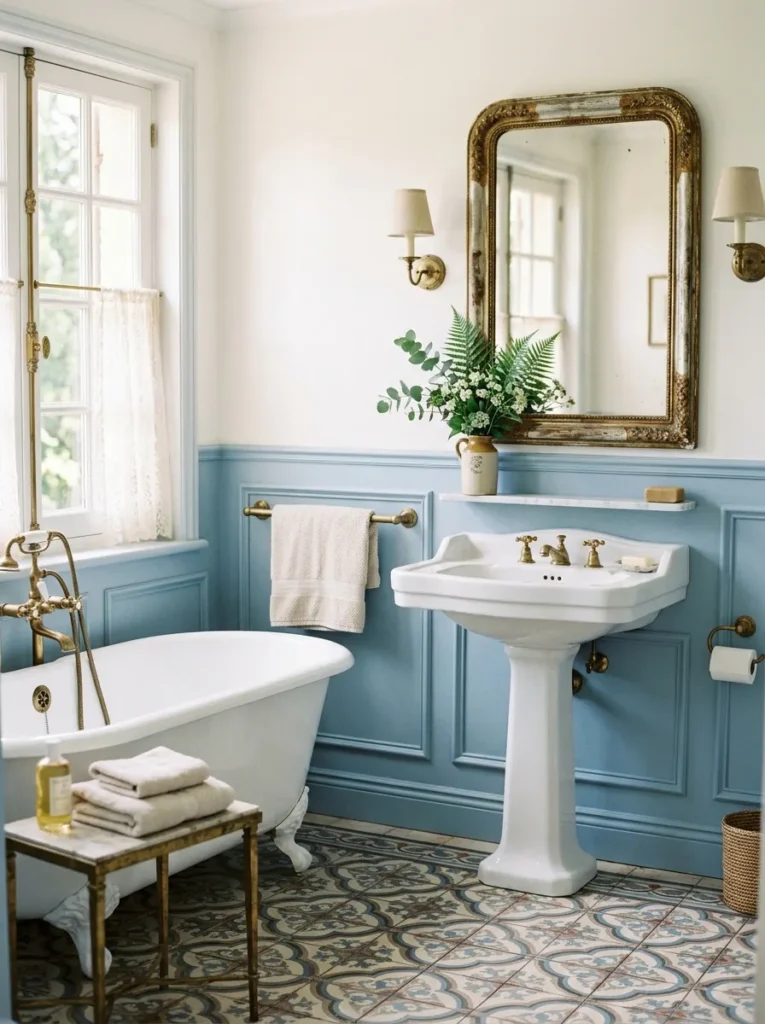
Powder blue can give a bathroom a charming vintage-inspired atmosphere, particularly when paired with classic white fixtures and traditional details. Use soft blue wall paneling or cabinetry with a white pedestal sink and timeless patterned flooring.
Add aged brass hardware, a framed mirror, and simple linen towels to reinforce the nostalgic character. Keep the decorative accents understated so the blue and architectural details remain the focus while the room still feels fresh and functional.
Vintage Details
- Powder blue paneling
- White traditional fixtures
- Aged brass hardware
- Classic patterned flooring
15. Navy Blue Home Library with Moody Elegance
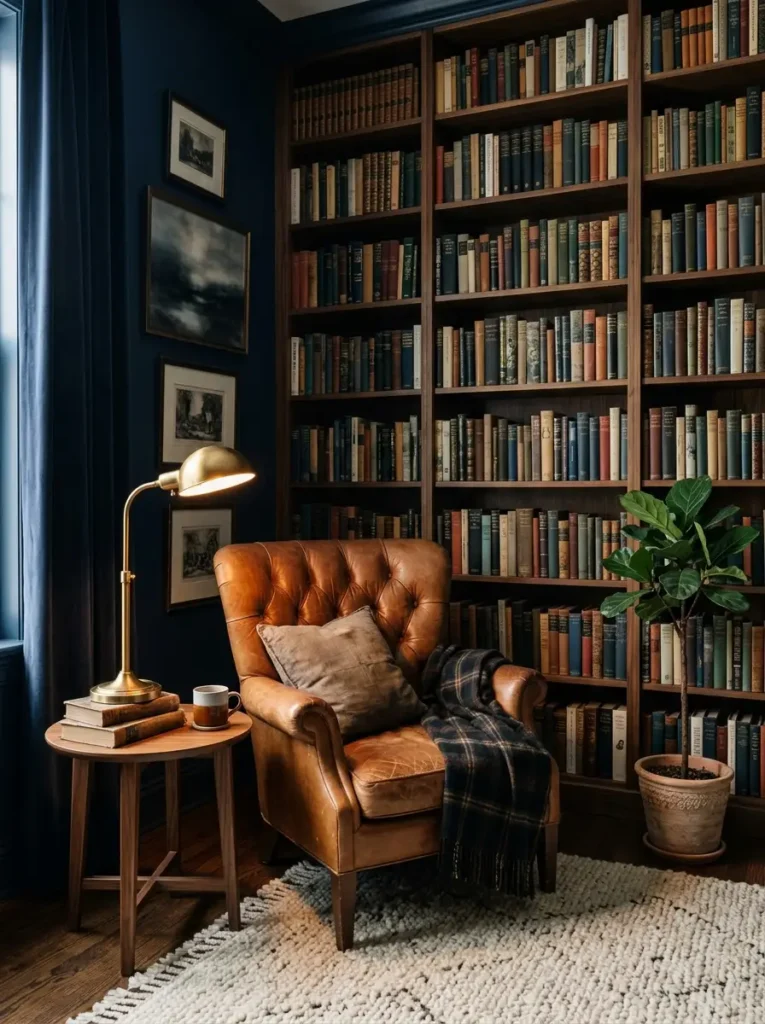
Navy blue walls can turn a home library or reading corner into a cozy, sophisticated retreat. Cover the walls in a rich navy shade and add warm walnut bookshelves, a comfortable leather chair, and a soft neutral rug.
Use warm lighting to balance the darker palette, such as a brass reading lamp or shaded table light. A few framed artworks and carefully arranged books can add personality without making the room feel visually crowded.
Lighting Tip
Warm bulbs help deep blue rooms feel inviting rather than overly dark.
16. Blue Ceiling with Soft Neutral Walls
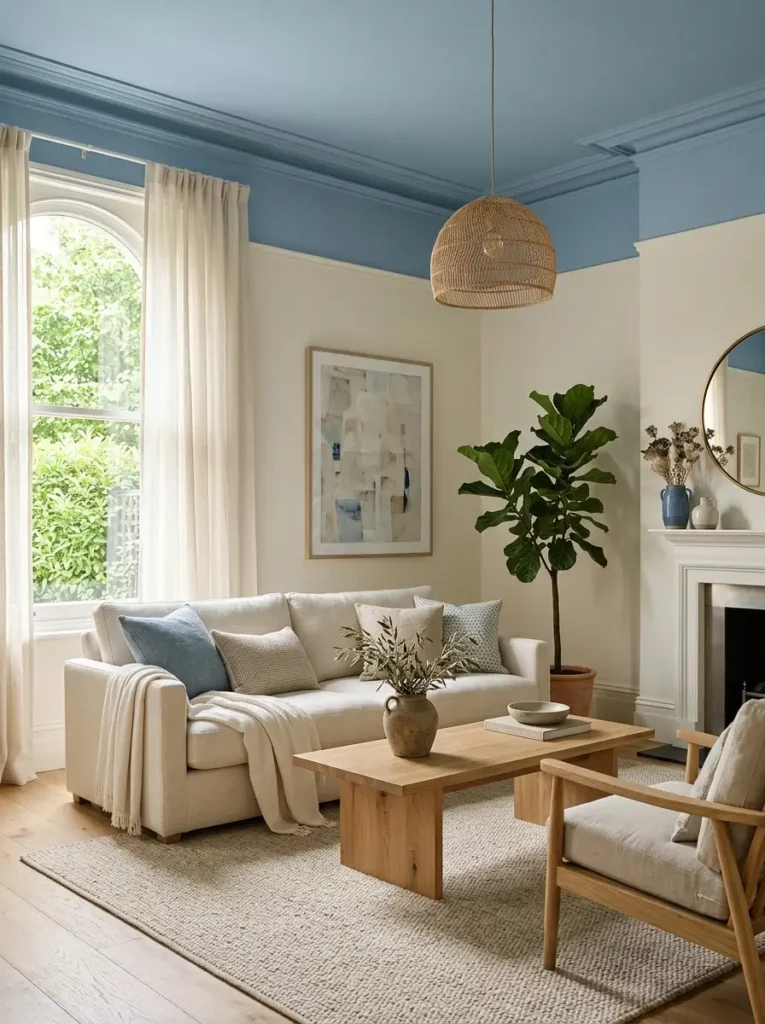
Painting the ceiling blue can introduce personality in a more unexpected way while keeping the main walls light and versatile. A soft muted blue works particularly well with warm white walls, creating a subtle color moment that draws the eye upward.
Continue the blue through a few small accessories such as cushions, artwork, or a ceramic lamp. Natural wood and woven textures can add warmth, helping the unusual ceiling treatment feel intentional and connected to the rest of the room.
Try This Approach
Light neutral walls + muted blue ceiling + small repeated blue accents
17. Teal and Brass Room with Rich Character
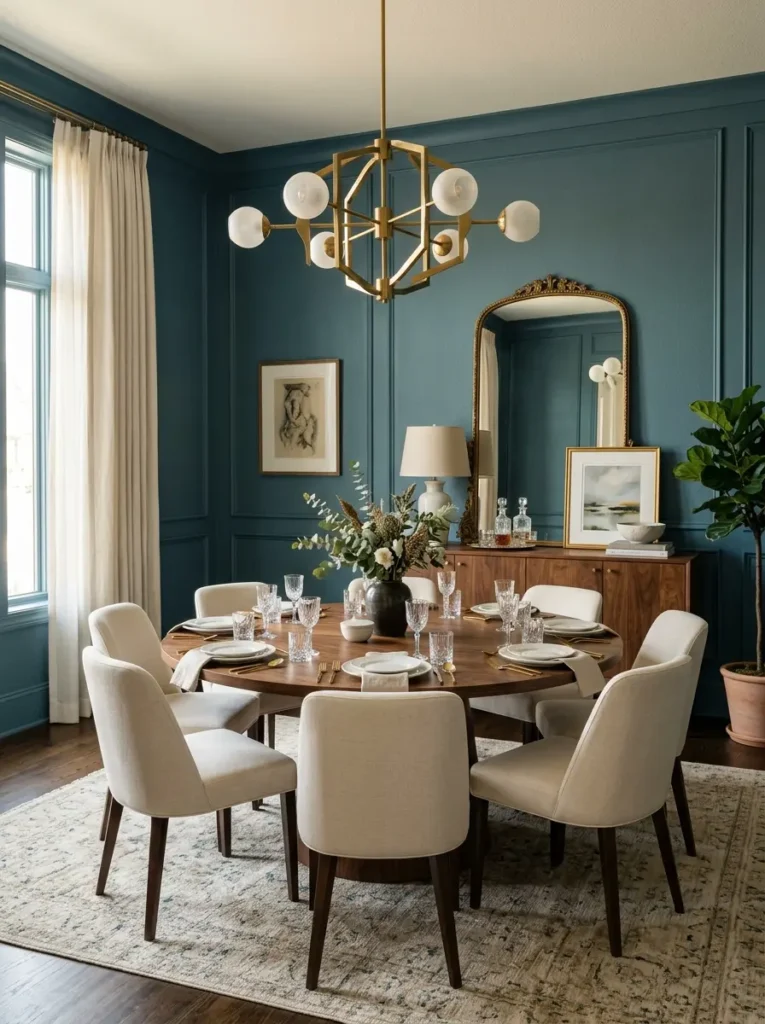
Teal blue can bring more energy and depth than softer blue shades, especially when paired with warm metallic accents. Use muted teal on the walls or cabinetry and introduce brass through lighting, hardware, mirrors, or decorative objects.
Balance the stronger color with cream upholstery, warm wood, and natural textiles. This combination works especially well in dining rooms, living spaces, and bedrooms where you want a sophisticated look with a little more personality.
Color Balance
Teal + cream + warm wood + brass
18. Blue Striped Walls for a Classic Look
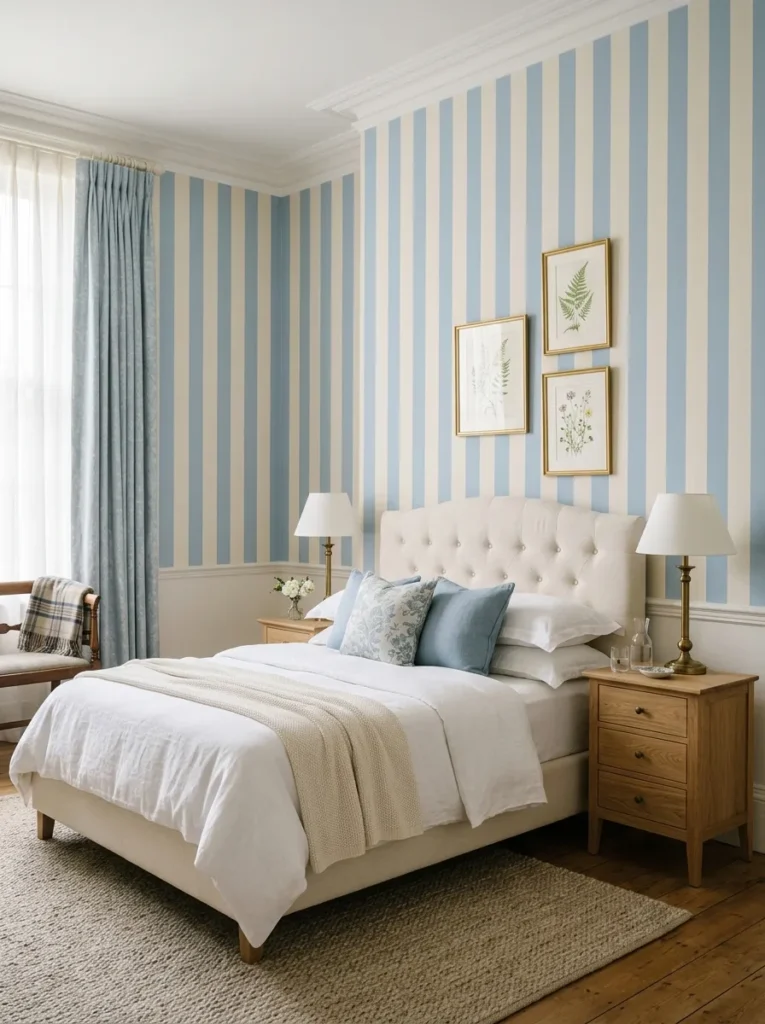
Blue stripes can add architectural interest without requiring complicated decoration. Use soft blue and warm white vertical stripes in a bedroom, hallway, or small sitting room to create a classic pattern that visually emphasizes the height of the space.
Keep the furniture and accessories relatively simple so the walls do not compete with too many patterns. Solid cream upholstery, natural wood, and small blue accents can complete the room while allowing the striped treatment to remain the defining feature.
Pattern Tip
Choose wider stripes for a relaxed traditional look and narrower stripes when you want more visual energy.
19. Blue and White Gallery Wall for a Refined Look
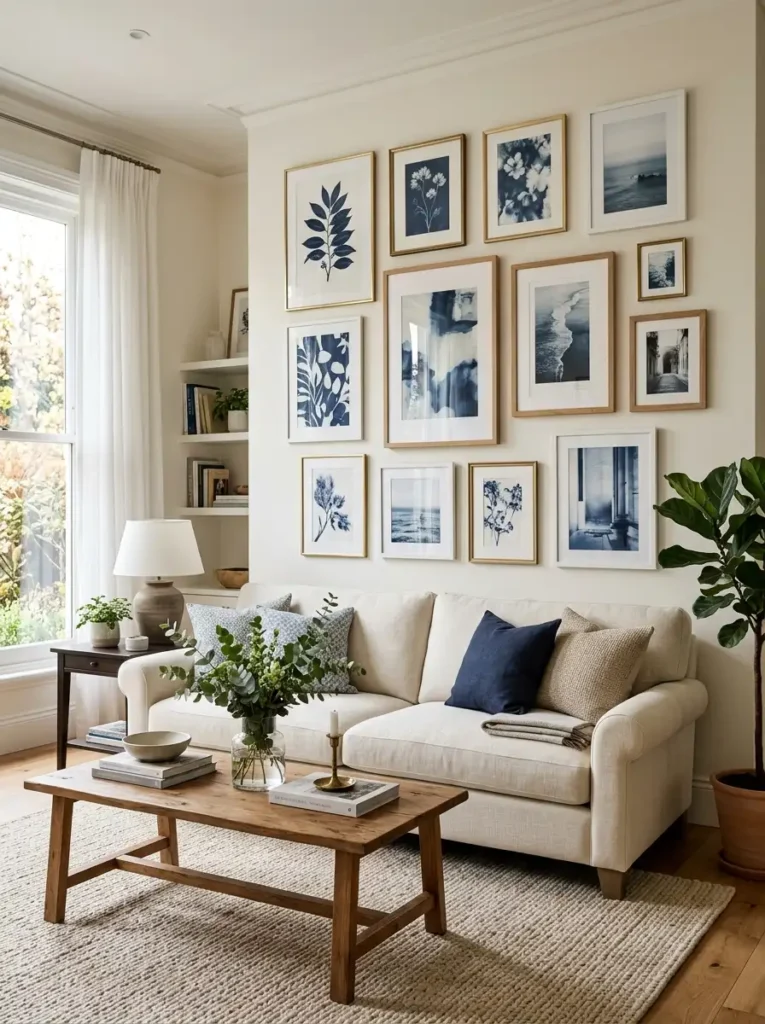
A blue and white gallery wall can add personality to a neutral room without making the space feel overly colorful. Combine botanical prints, abstract artwork, photography, and simple blue-toned illustrations using mostly white, natural wood, or slim brass frames.
Keep the surrounding furniture understated so the artwork remains the focal point. A cream sofa, light wood console, and a few blue cushions can subtly repeat the gallery colors while creating a polished connection throughout the room.
Gallery Formula
Blue artwork + white frames + natural wood + small brass accents
20. Blue Reading Nook with a Cozy Window Seat
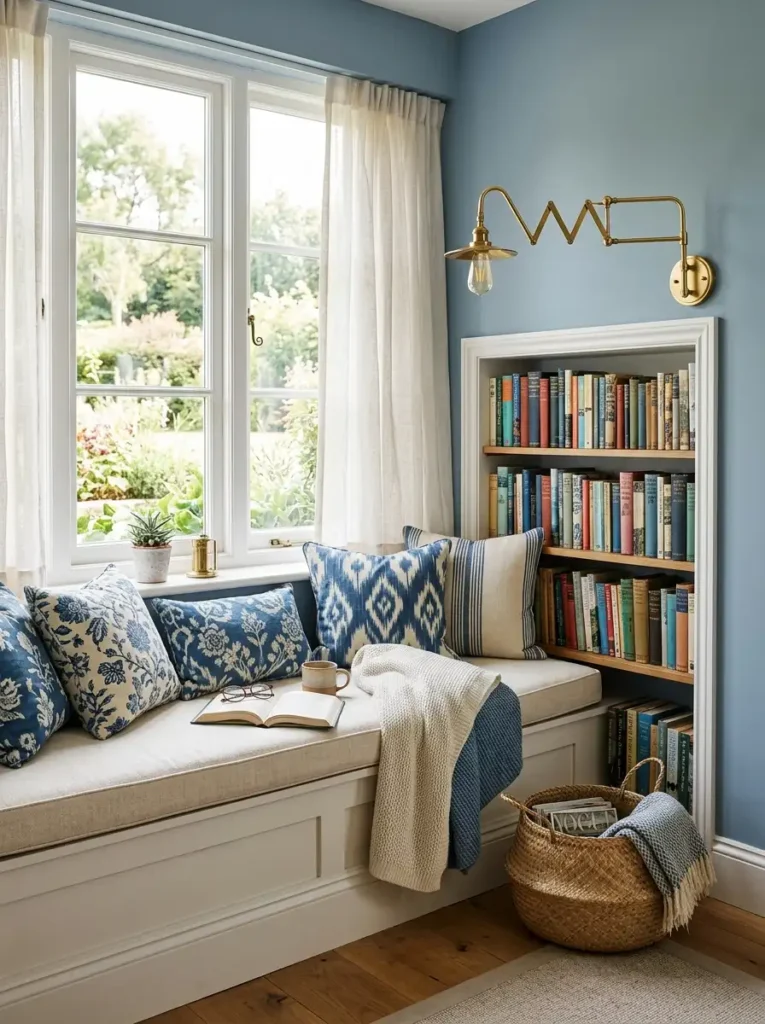
A blue reading nook can turn an unused corner into one of the most inviting spots in the home. Paint the surrounding walls a calm blue and add a comfortable upholstered window seat layered with cream and patterned cushions.
Use a small wall-mounted shelf or narrow bookcase to keep favorite books nearby without taking up floor space. A brass swing-arm lamp provides focused evening light, while linen curtains soften daylight and make the nook feel private and comfortable.
The One Thing to Remember
A small, well-designed reading corner does not need much furniture; comfortable seating, good lighting, and nearby storage are enough.
21. Icy Blue Entryway with a Fresh Feel
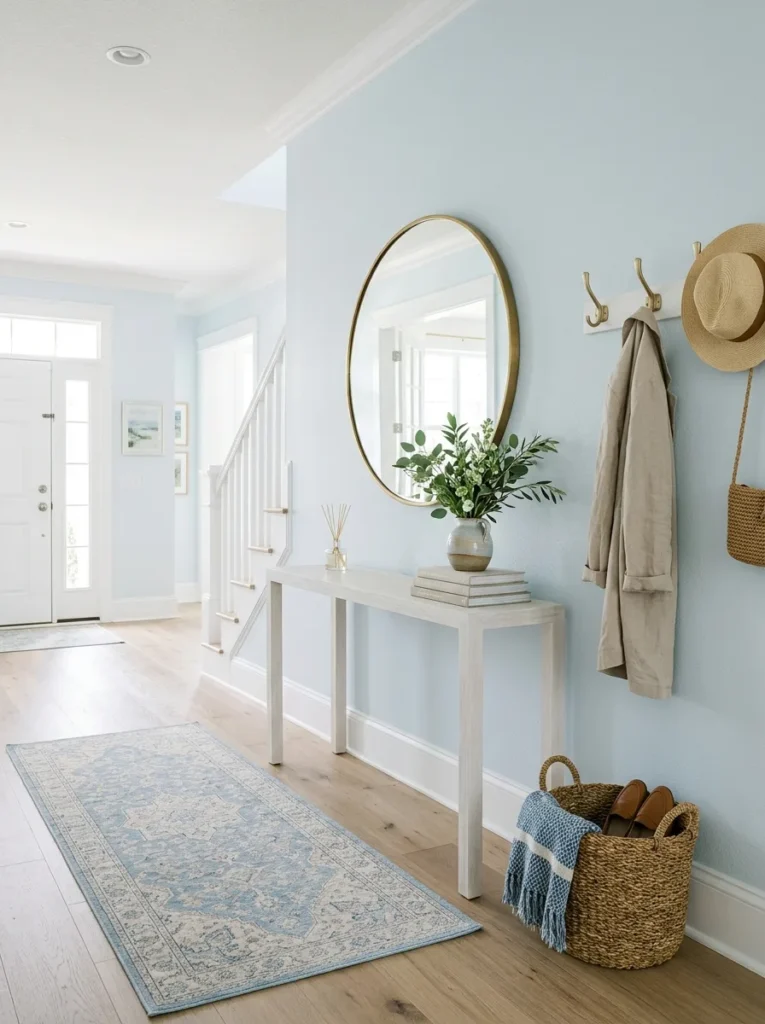
Icy blue can make an entryway feel brighter and more spacious, particularly when combined with white trim and reflective surfaces. Use the pale shade on the walls and introduce a white console, natural woven basket, and light wood details.
A large mirror can bounce daylight around the entrance while a patterned runner adds warmth underfoot. Keep the decorative styling simple with a small vase, framed artwork, and practical hooks so the entry remains attractive and functional.
Entryway Essentials
- Icy blue walls
- Large mirror
- White or light wood console
- Natural woven storage
- Patterned runner
22. Cobalt Blue Kitchen Island as a Bold Focal Point
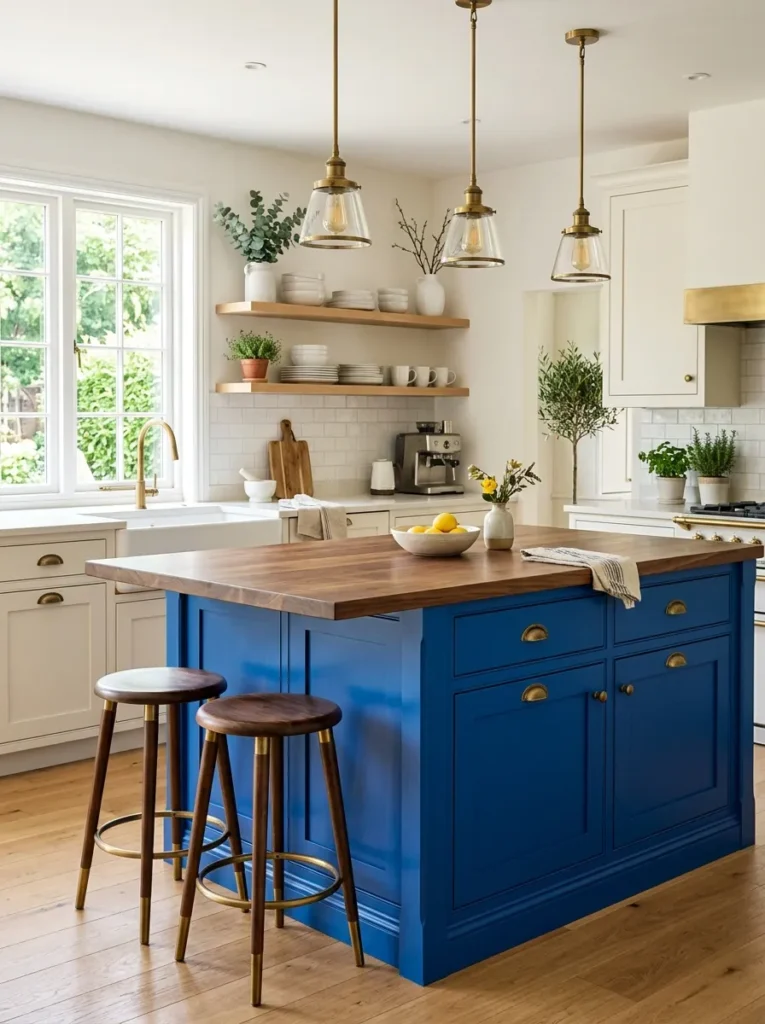
A cobalt blue island can bring strong personality to an otherwise neutral kitchen without requiring every cabinet to be colorful. Keep the surrounding cabinetry warm white or cream and let the island provide the room’s main color statement.
Balance the saturated blue with a warm wood countertop or stools, then add aged brass hardware for extra warmth. Open shelves with white ceramics can keep the kitchen visually bright and prevent the bold island from dominating the entire space.
Best Approach
Use cobalt on one major feature, then surround it with light surfaces and warm natural materials.
23. Blue and Brass Powder Room for Dramatic Style
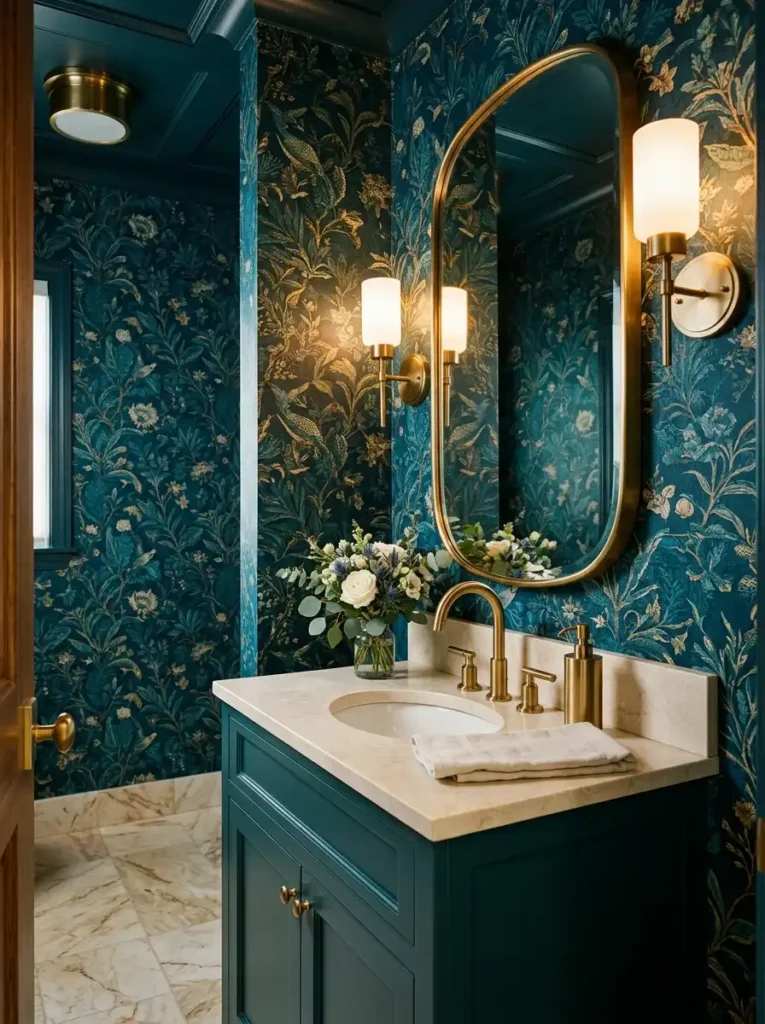
A small powder room is an ideal place to experiment with a stronger blue because the limited footprint makes a bold color feel intentional rather than overwhelming. Deep blue wallpaper, paint, or tile can create a dramatic backdrop for a compact vanity.
Use warm brass hardware and a statement mirror to keep the space from feeling cold. Marble or cream-colored surfaces can provide another light element, while a small floral arrangement adds softness and a polished finishing touch.
Best For
Small bathrooms where you want a dramatic color moment without committing an entire large room.
24. Deep Sapphire Home Office for a Focused Mood
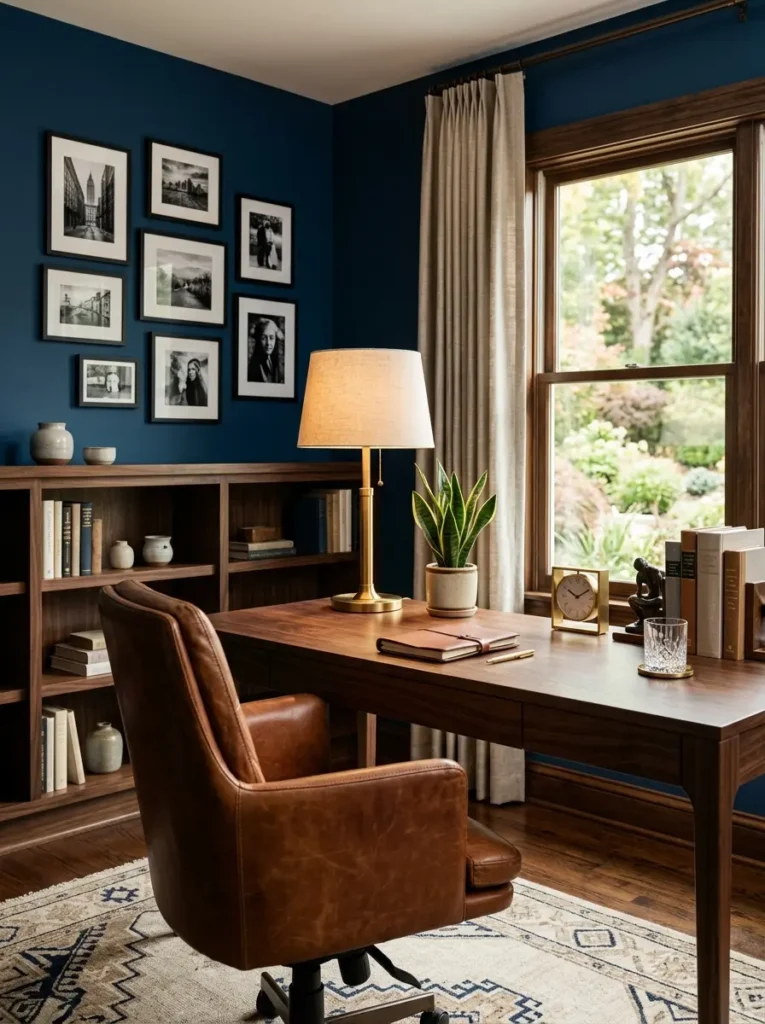
Deep sapphire walls can give a home office a confident, focused atmosphere while adding more character than standard neutral paint. Pair the rich blue with a dark wood desk, comfortable leather chair, and warm lighting for a sophisticated workspace.
Use brass desk accessories, framed black-and-white photography, or a small gallery arrangement to add polished details without introducing competing colors. A patterned neutral rug can ground the room and soften the darker palette underfoot.
Color + Furniture
Deep sapphire + dark wood + cognac leather + brass + warm neutrals
How to Make a Blue Room Feel Warm
Blue naturally leans cool, so the easiest way to make it feel inviting is to introduce materials with warmer visual qualities. Natural wood, brass, leather, woven fibers, cream textiles, and warm lighting can all soften a blue-heavy room without taking away from the color.
The shade also matters. Pale blues usually feel airy, while navy, sapphire, and midnight blue create more depth. Before choosing paint or furniture, look at the room’s natural light and test your blue at different times of day.
Quick Warm-Up Formula
Blue + natural wood + cream + warm metal + soft lighting
Tips for Decorating with Blue
Start With the Room’s Light
A bright room can handle stronger blue shades, while darker spaces may benefit from softer or muted blues.
Balance Cool and Warm Tones
Use wood, brass, leather, beige, or cream to prevent blue from making the room feel too cold.
Repeat Blue Carefully
If you use blue on the walls, repeat it in just a few cushions, artwork, ceramics, or textiles rather than matching everything.
Layer Different Textures
Velvet, linen, rattan, wood, wool, and woven materials add depth and keep a blue room from feeling flat.
Use Dark Blue Strategically
Navy and sapphire can look luxurious on larger walls, but good lighting and lighter furnishings help maintain balance.
Final Thoughts
Blue is one of the most flexible colors for creating a home that feels calm, stylish, or dramatically sophisticated. From powder blue bedrooms and coastal spaces to navy libraries, cobalt kitchens, and rich sapphire offices, the right shade can completely change the personality of a room.
Start with the mood you want, then choose the blue shade, materials, lighting, and accent colors around it. Warm wood, cream textiles, natural textures, and brass details are especially useful for balancing cooler blues and creating rooms that feel polished without becoming cold.
Frequently Asked Questions
What is the best blue shade for a bedroom?
Soft powder blue, dusty blue, and muted blue-gray are excellent choices when you want a calm bedroom. Deeper navy or midnight blue can also work beautifully when balanced with lighter bedding and warm lighting.
What colors go well with blue rooms?
Cream, white, beige, natural wood, brass, and warm brown are reliable pairings. Sage green can create a natural feel, while blush or mustard accents can add more contrast.
How do I make a blue room feel warmer?
Add warm materials such as natural wood, leather, woven textures, brass, cream textiles, and warm-toned lighting. These details balance the naturally cooler quality of blue.
Is dark blue good for small rooms?
Yes, but use it thoughtfully. A small room with good natural or layered artificial lighting can look dramatic and cozy with navy or sapphire walls. Lighter furniture and reflective surfaces can help maintain balance.
Can I use different shades of blue in one room?
Absolutely. Layering related shades can add depth and make the room feel more thoughtfully designed. Keep one shade dominant and use the others through furniture, textiles, artwork, or accessories.