
23 Tuscan Kitchen Ideas for a Warm Look
I spent two weeks in Tuscany a few years back, and what stuck with me wasn’t any single kitchen I saw — it was how none of them looked “designed.” Terracotta floors that had clearly been walked on for decades, copper pots that weren’t shiny anymore, a crooked shelf of pottery that somehow looked intentional. When I got home and started researching Tuscan kitchen ideas for my own place, I realized most guides miss that point entirely and just tell you to add terracotta tile and call it done.
What I’ve put together here is 23 ideas that actually build on each other — warm wood cabinetry, natural stone, aged iron hardware, that kind of thing — so you can create a Tuscan-style kitchen that feels collected over time rather than bought in one trip to a showroom. Whether you’re planning a full renovation or just want to warm up your kitchen with a few Mediterranean touches, there’s a starting point here that fits your budget.
1. Warm Terracotta and Cream Kitchen

Terracotta and cream create one of the easiest color combinations for a warm Tuscan kitchen. Use creamy cabinetry or walls as the foundation, then bring in terracotta through the backsplash, flooring, pottery, or smaller decorative accents.
Natural wood can connect the two shades and prevent the room from feeling too colorful. A few aged brass or dark iron details can add another layer of warmth while keeping the overall design relaxed and authentic.
Palette: Terracotta + warm cream + natural wood + aged brass
2. Reclaimed Wood Ceiling Beams
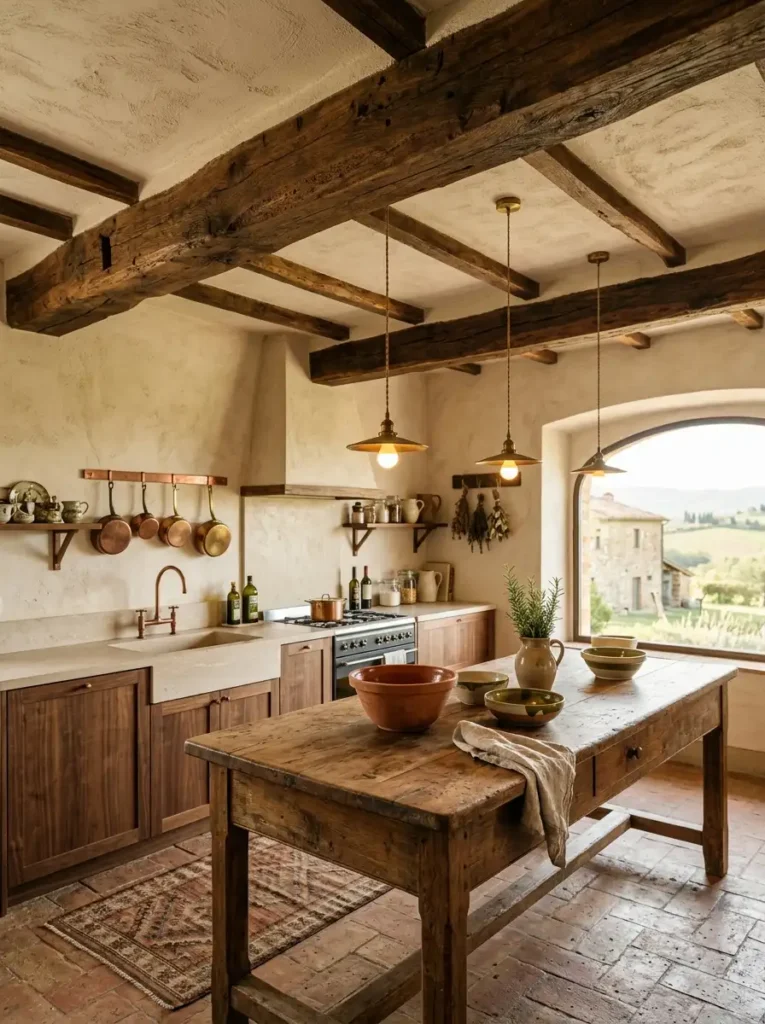
Exposed reclaimed wood beams can immediately give a kitchen the architectural character associated with an old Tuscan farmhouse. Their natural imperfections, knots, and darker tones make the ceiling feel substantial without requiring decorative clutter throughout the room.
Keep the cabinetry and walls relatively simple so the beams remain visually important. Cream plaster, stone countertops, and warm pendant lighting work especially well underneath them, creating a cozy contrast between rustic structure and practical modern comfort.
Best Pairing: Reclaimed wood + cream plaster + natural stone + warm brass
3. Natural Stone Backsplash
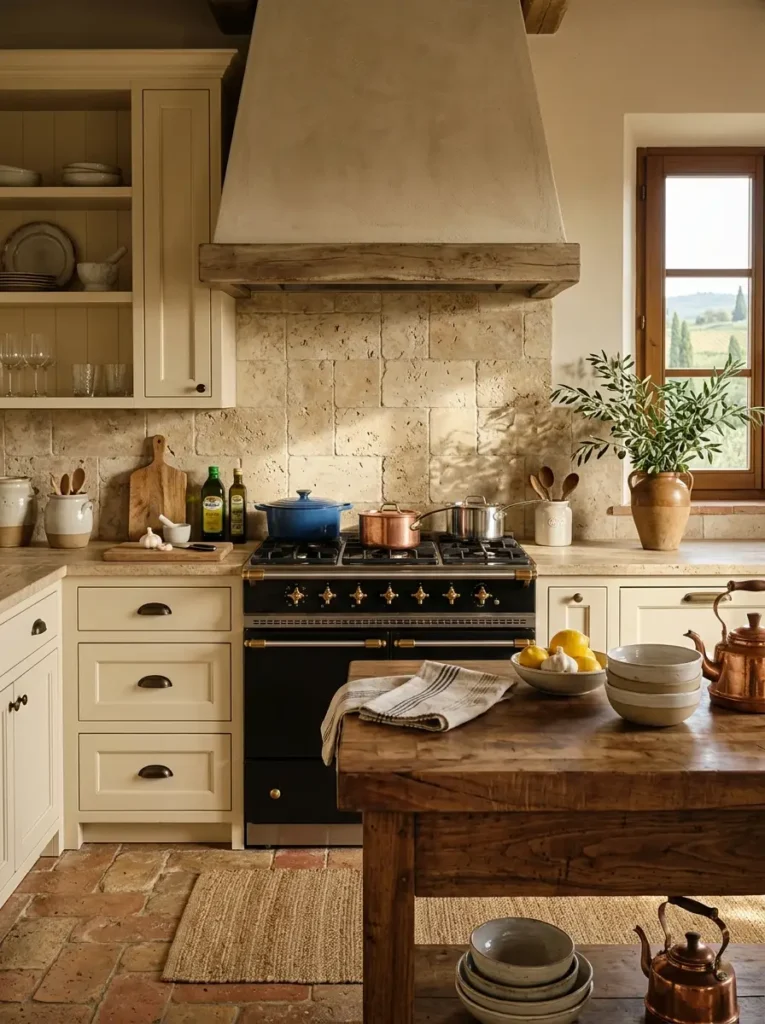
A natural stone backsplash adds the rough, organic texture that makes Tuscan kitchens feel connected to the landscape. Travertine, limestone, or softly irregular stone can work beautifully behind the range or across the main cooking wall.
Balance the heavier stone with smoother cabinetry and warm wood accents. Keeping the stone in a naturally varied finish rather than an overly uniform pattern helps the kitchen feel handcrafted and established rather than newly manufactured.
Do This: Use softly textured natural stone behind the main cooking area and keep the surrounding finishes simple.
4. Aged Wood Cabinetry
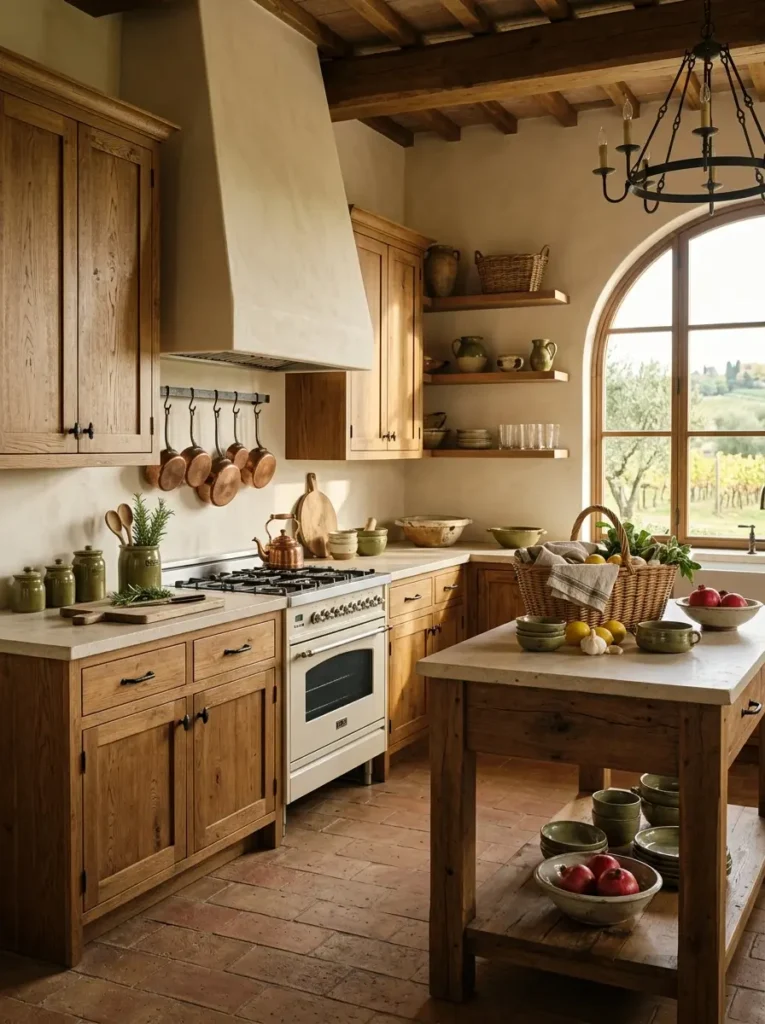
Instead of perfectly smooth modern cabinets, choose warm wood cabinetry with subtle variations in tone and a gently aged appearance. This instantly makes the kitchen feel more established and gives the room the relaxed character associated with traditional Italian homes.
The finish does not need to look heavily distressed. Small imperfections, visible grain, antique-style hardware, and slightly uneven tones are enough to create the effect while keeping the kitchen sophisticated and practical.
Color Formula: Warm oak cabinetry + cream walls + muted olive + dark iron
5. Wrought Iron Pendant Lighting
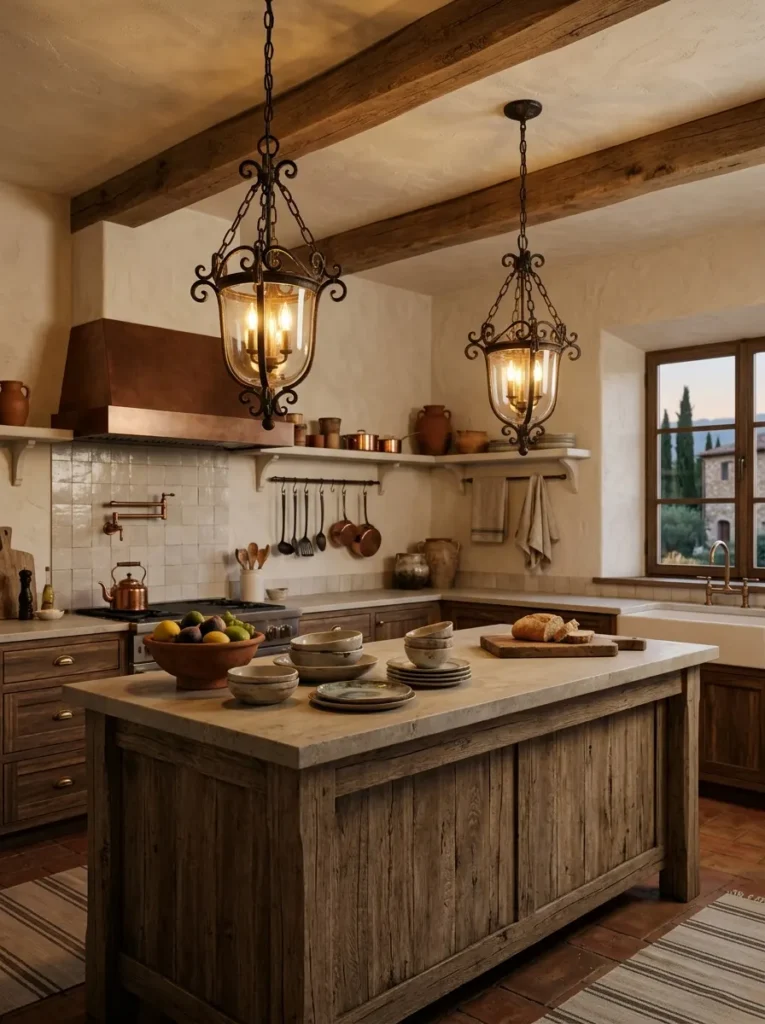
Wrought iron lighting brings a strong old-world detail into a Tuscan kitchen without requiring a major renovation. A simple chandelier above the island or several iron pendants can add structure and contrast against cream walls and warm wood.
Choose fixtures with curved or slightly handcrafted forms rather than ultra-modern geometric designs. Warm bulbs will soften the dark metal and create the welcoming atmosphere that makes Tuscan interiors feel especially inviting in the evening.
Quick Tip: Choose warm 2700K-style lighting so dark iron fixtures feel cozy instead of harsh.
6. Terracotta Tile Flooring
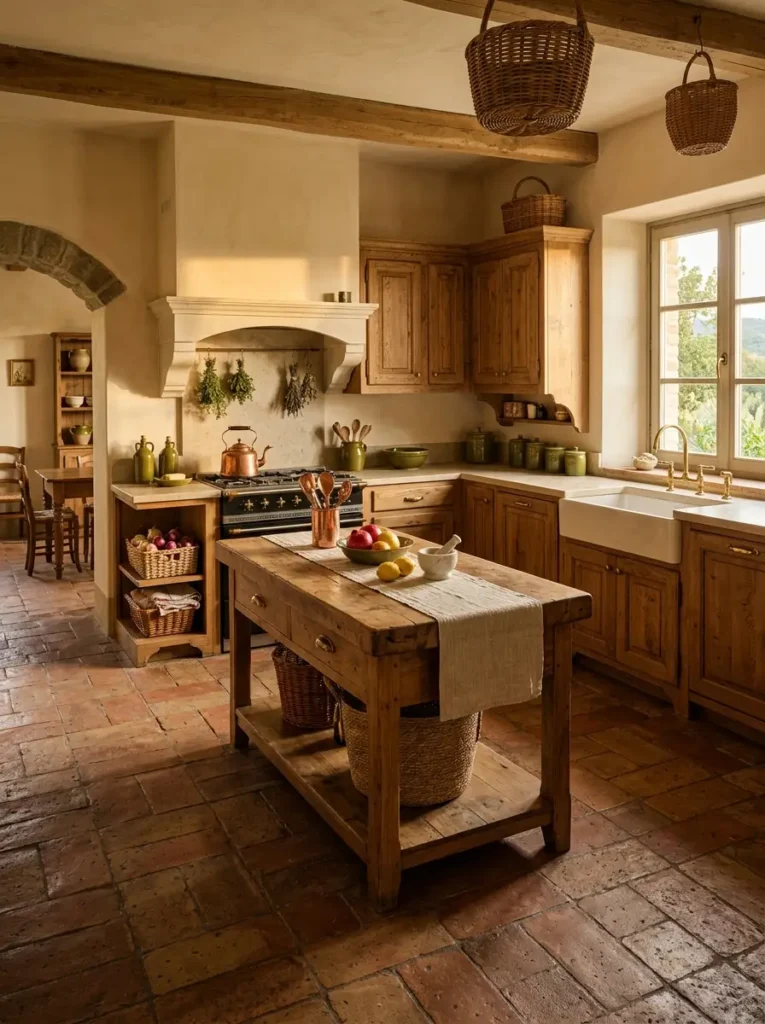
Terracotta tiles bring instant warmth and an authentic Mediterranean feel to a Tuscan kitchen. Their natural color variation keeps the floor from looking too uniform and pairs beautifully with cream walls and wooden cabinetry.
Choose slightly aged or handmade-looking tiles for more character. Keep the rest of the finishes simple so the flooring becomes a strong foundation rather than competing with every other detail.
Best Pairing: Terracotta tile + cream walls + warm oak + olive accents
7. Open Wooden Shelving
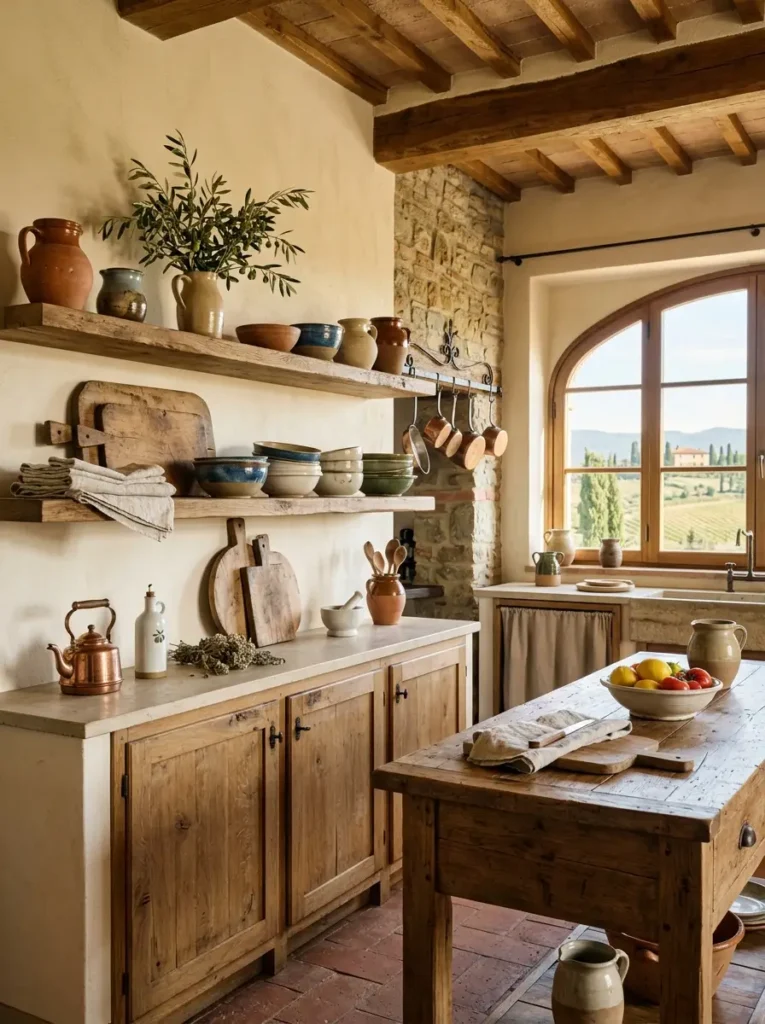
Open wooden shelves make a Tuscan kitchen feel more relaxed and lived-in while giving you space to display beautiful everyday pieces. Use them for handmade pottery, ceramic bowls, wooden boards, and a few carefully chosen decorative items.
Avoid filling every shelf. Leaving some open space allows the natural wood, pottery, and warm wall color to stand out and keeps the kitchen looking curated rather than cluttered.
Do This: Mix pottery, wood, and a little greenery while leaving some shelf space open.
8. Farmhouse Sink
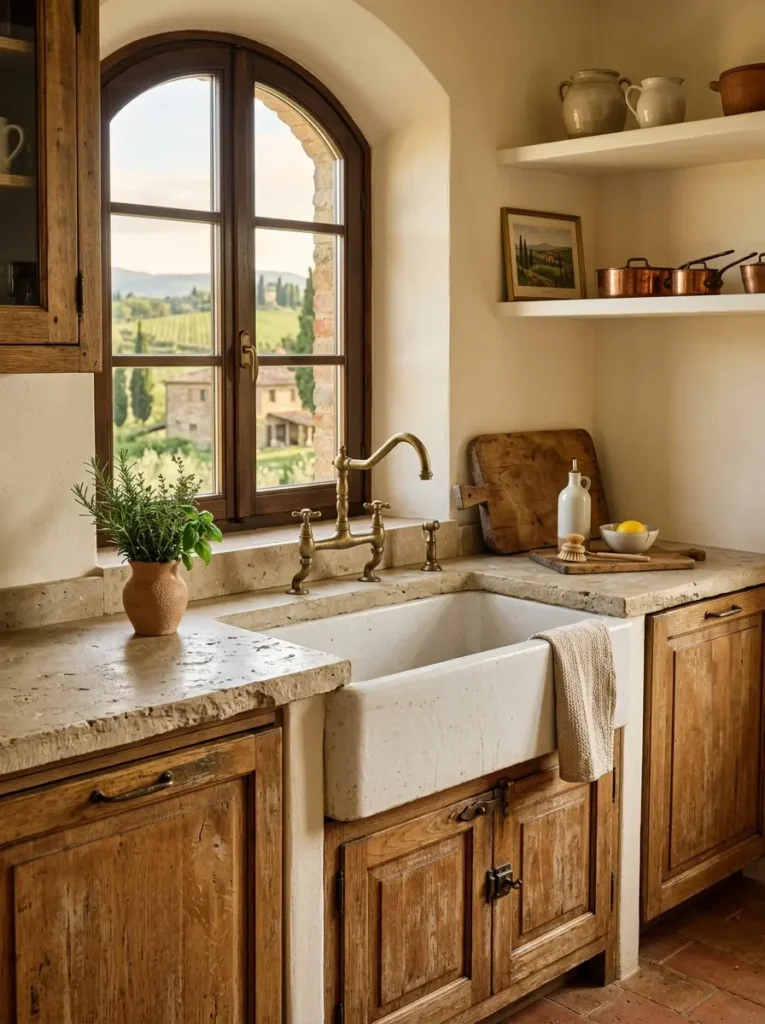
A deep farmhouse sink fits naturally into a Tuscan kitchen because it combines traditional character with everyday practicality. A classic white fireclay sink creates a beautiful contrast against warm wood cabinetry and earthy countertops.
Pair it with an aged brass or bronze faucet for a more authentic appearance. Keep the counter around the sink relatively open so the sink remains an attractive focal point rather than getting lost among accessories.
Best Pairing: White fireclay + aged brass + warm wood + natural stone
9. Copper Cookware Display
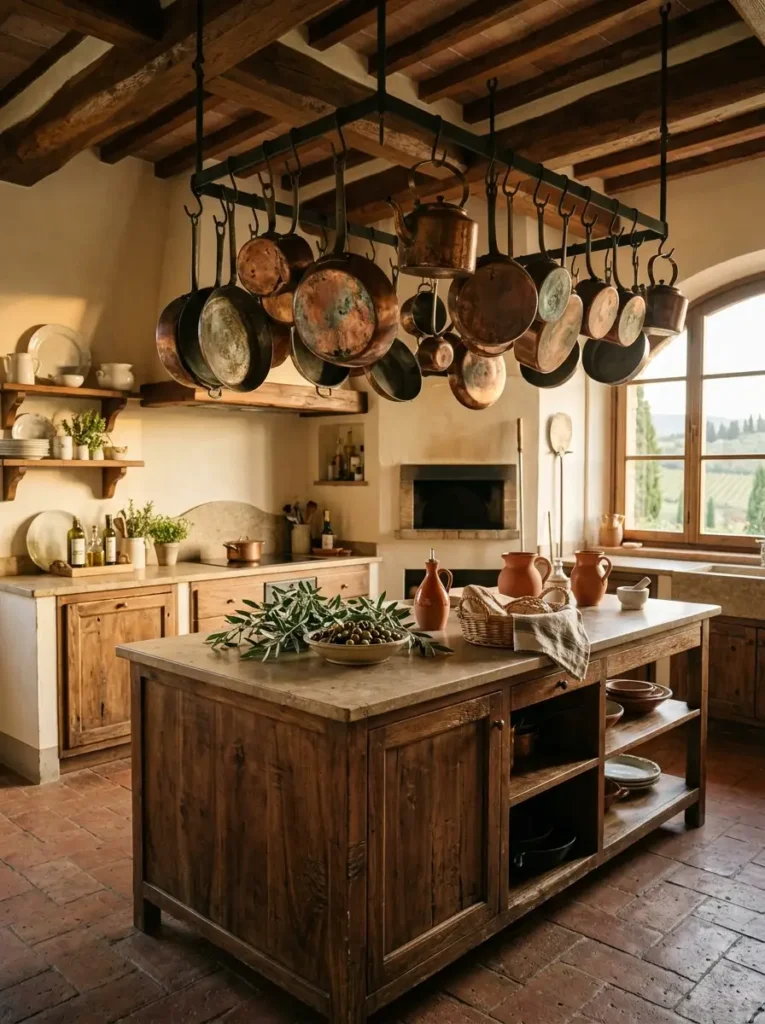
Copper cookware adds warmth, shine, and old-world character to a Tuscan kitchen. Hang a small collection of copper pots above the island or arrange a few pieces on an open shelf where their natural patina can become part of the decor.
The key is restraint. A carefully selected collection looks authentic, while too many copper pieces can make the kitchen feel overly themed. Pair the warm metal with wood, stone, and cream finishes.
Quick Tip: Let copper develop a natural patina instead of trying to keep every piece perfectly polished.
10. Arched Kitchen Details
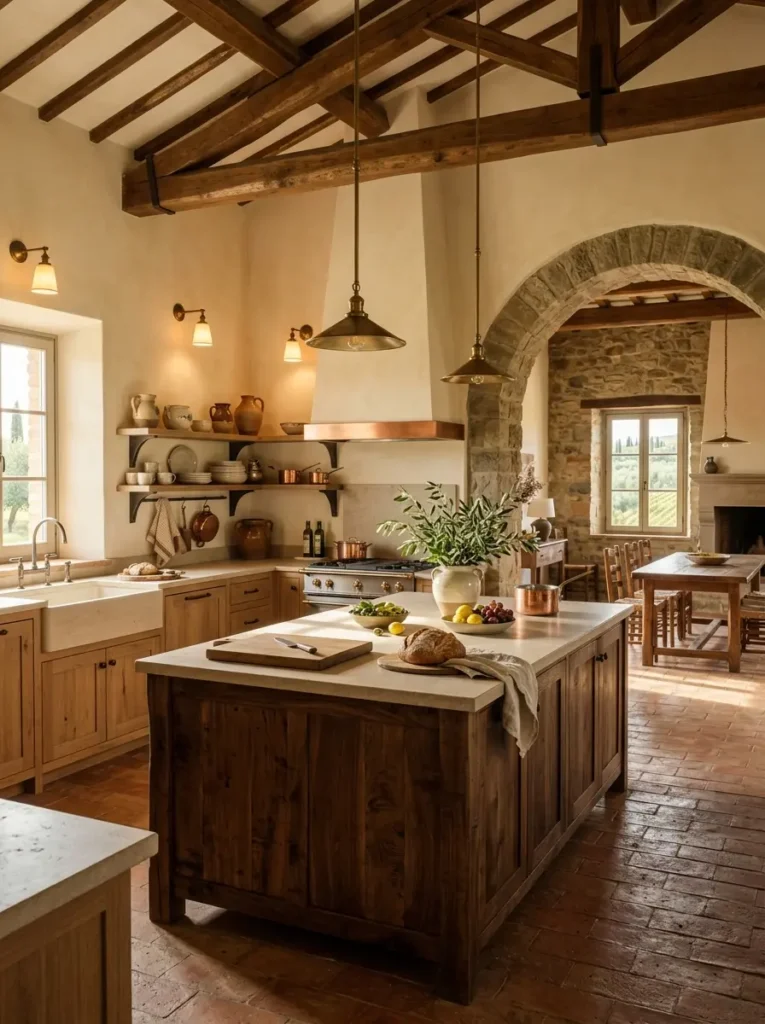
Arched details can soften the strong lines of cabinets and countertops while adding a distinctly Mediterranean character. An arched doorway, recessed niche, or curved range surround can become a beautiful architectural feature.
You do not need several arches throughout the kitchen. One carefully placed curved detail can be enough to create the feeling of an old Italian home while keeping the overall design balanced and timeless.
One Thing to Remember: Use one strong arch as a focal point rather than repeating the shape everywhere.
11. Butcher Block Countertops
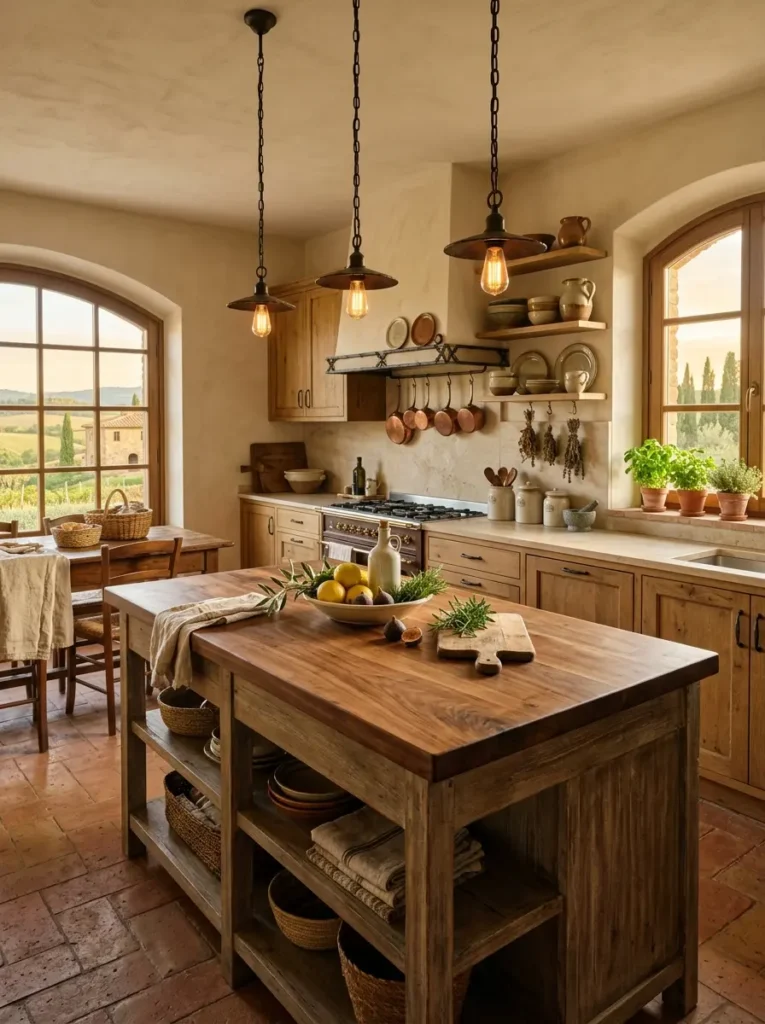
Butcher block countertops bring natural warmth to a Tuscan kitchen and work especially well alongside stone, plaster, and aged cabinetry. The visible wood grain makes the space feel welcoming and handcrafted.
Use a medium or warm wood tone rather than a very pale finish. This creates a richer connection with terracotta floors and other earthy materials.
Material Mix: Warm wood + limestone + terracotta + aged metal
12. Hand-Painted Ceramic Tile
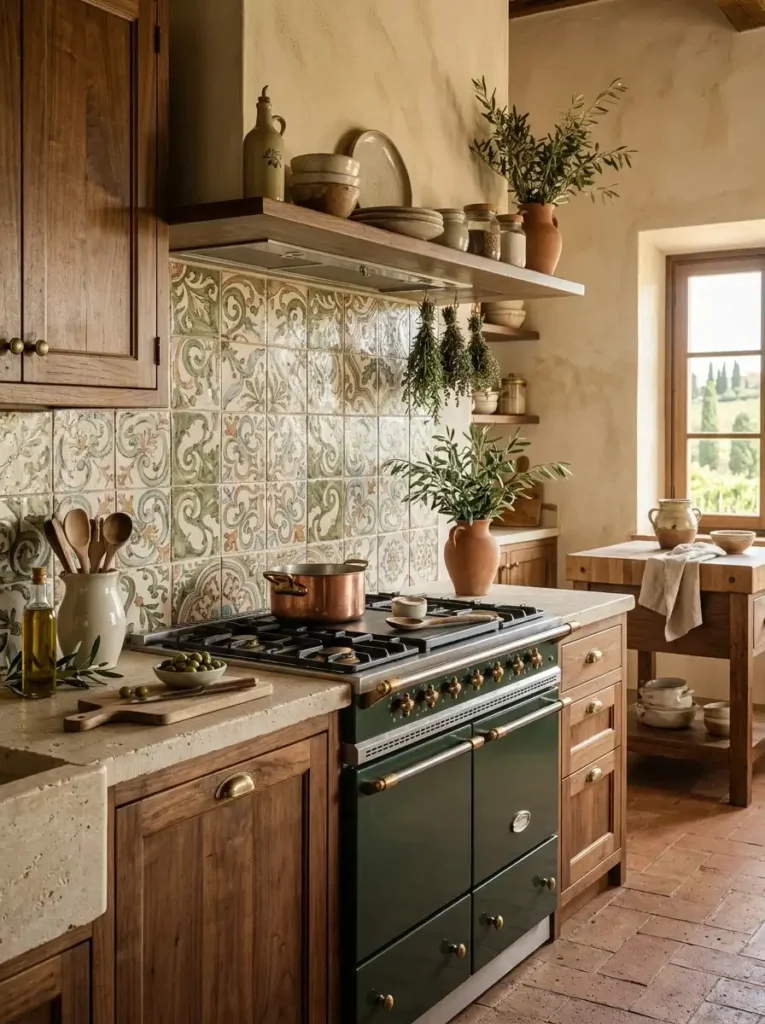
Hand-painted ceramic tiles can introduce subtle color and craftsmanship without overwhelming the kitchen. Use them behind the range, around a backsplash, or as a small decorative border.
Choose earthy patterns in muted blue, olive, cream, or terracotta. Keeping the design slightly imperfect gives the kitchen a more authentic handmade character.
Tile Colors: Olive + cream + muted blue + terracotta
13. Olive Tree Accent
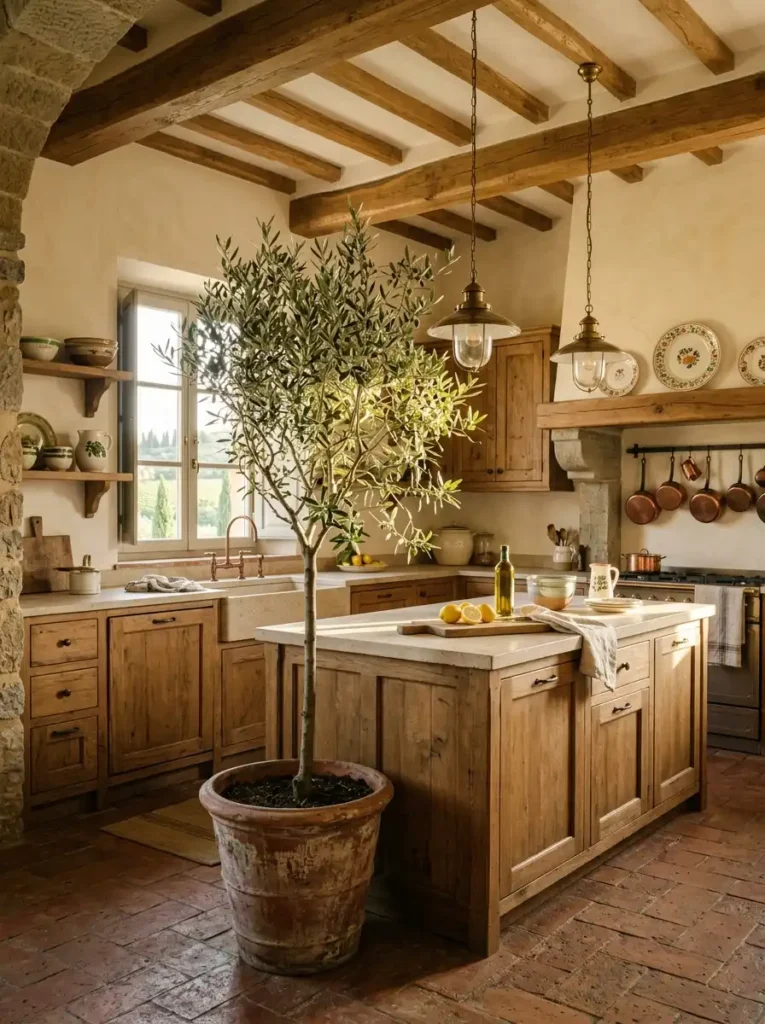
An olive tree instantly adds a Mediterranean feeling while bringing natural greenery into the kitchen. A medium-sized tree in a weathered terracotta planter can work beautifully beside an island, dining table, or empty corner.
Keep the planter simple and slightly rustic. The muted green leaves look especially beautiful against cream plaster, warm wood, and terracotta tones.
Greenery: Olive tree + terracotta planter + warm wood
14. Stone Range Hood
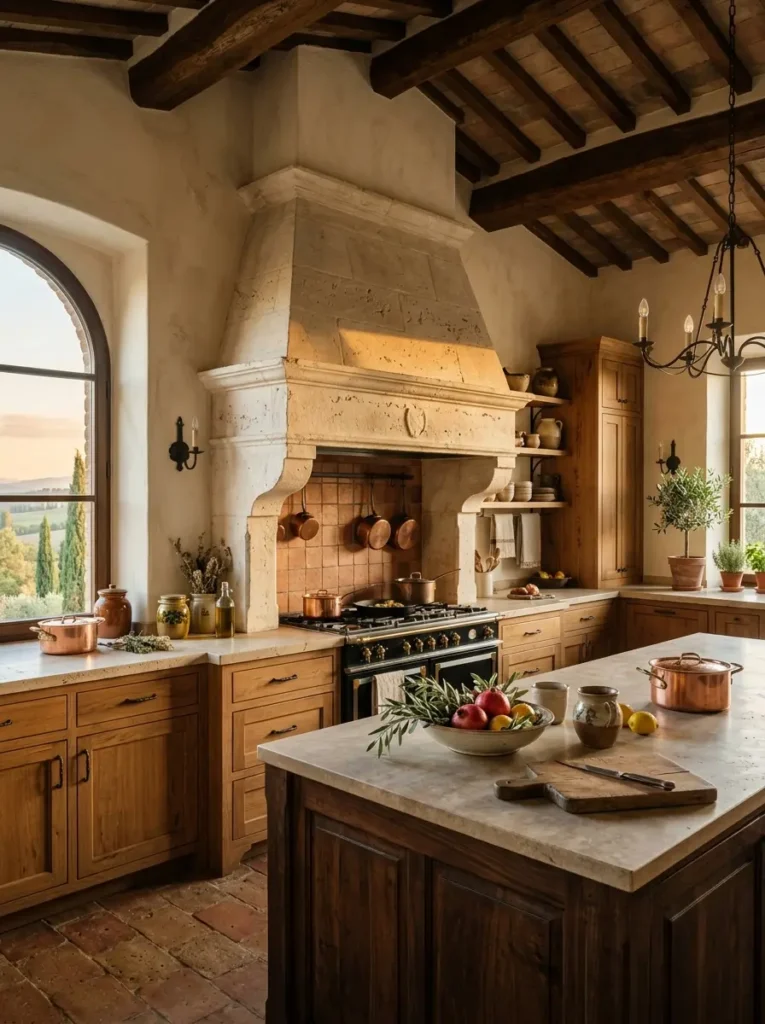
A substantial stone range hood can become the architectural centerpiece of a Tuscan kitchen. Limestone or plastered stone creates a soft, earthy appearance while adding visual weight above the cooking area.
Keep the hood simple and slightly curved or traditionally shaped. Pairing it with warm wood cabinetry prevents the stone from making the kitchen feel too heavy.
Focal Point: Natural stone hood + warm wood cabinetry + aged brass
15. Antique Furniture Accent
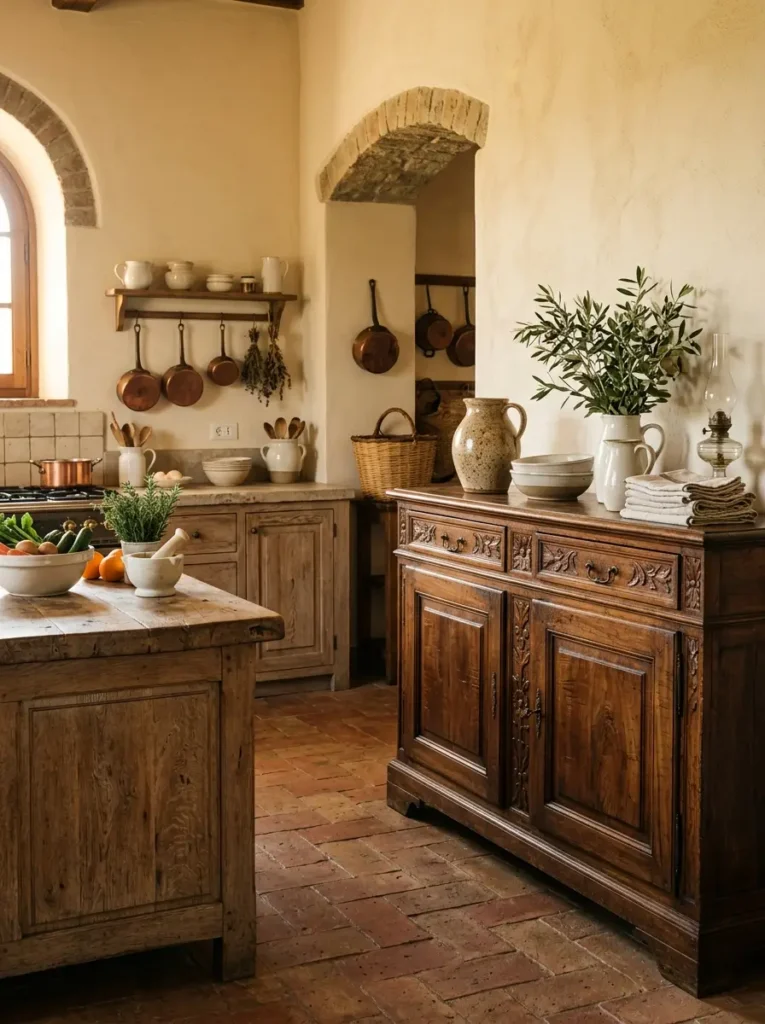
An antique sideboard, small wooden cabinet, or vintage table can give a Tuscan kitchen an instant sense of history. Look for pieces with visible wood grain, aged finishes, or simple carved details.
Place one statement piece where it can be appreciated without making the kitchen feel crowded. Its darker wood tone can also create a beautiful contrast against cream walls and lighter stone surfaces.
Character Piece: Aged wood + vintage hardware + natural stone
16. Layered Warm Lighting
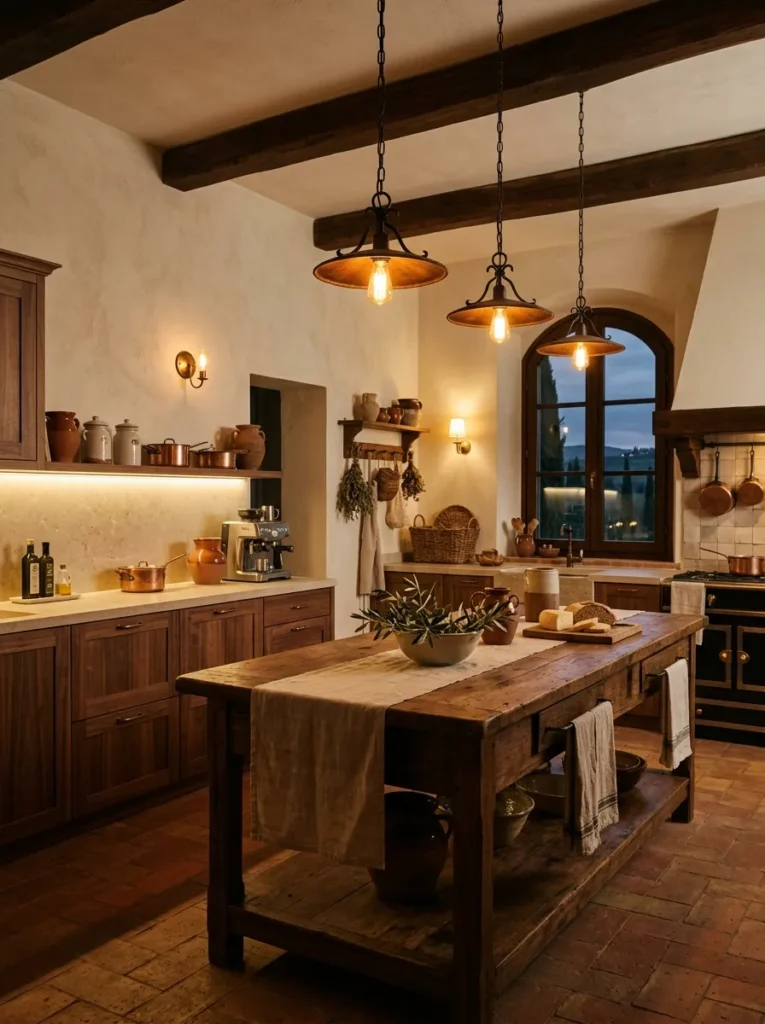
Tuscan kitchens feel especially inviting when several warm light sources work together. Combine pendant lights over the island with subtle under-cabinet lighting and a small decorative lamp or wall sconce.
Avoid relying on one bright ceiling fixture. Multiple softer sources create depth and highlight beautiful materials such as wood, stone, pottery, and textured walls.
Lighting Mood: Warm + soft + layered + inviting
17. Exposed Brick Accent Wall
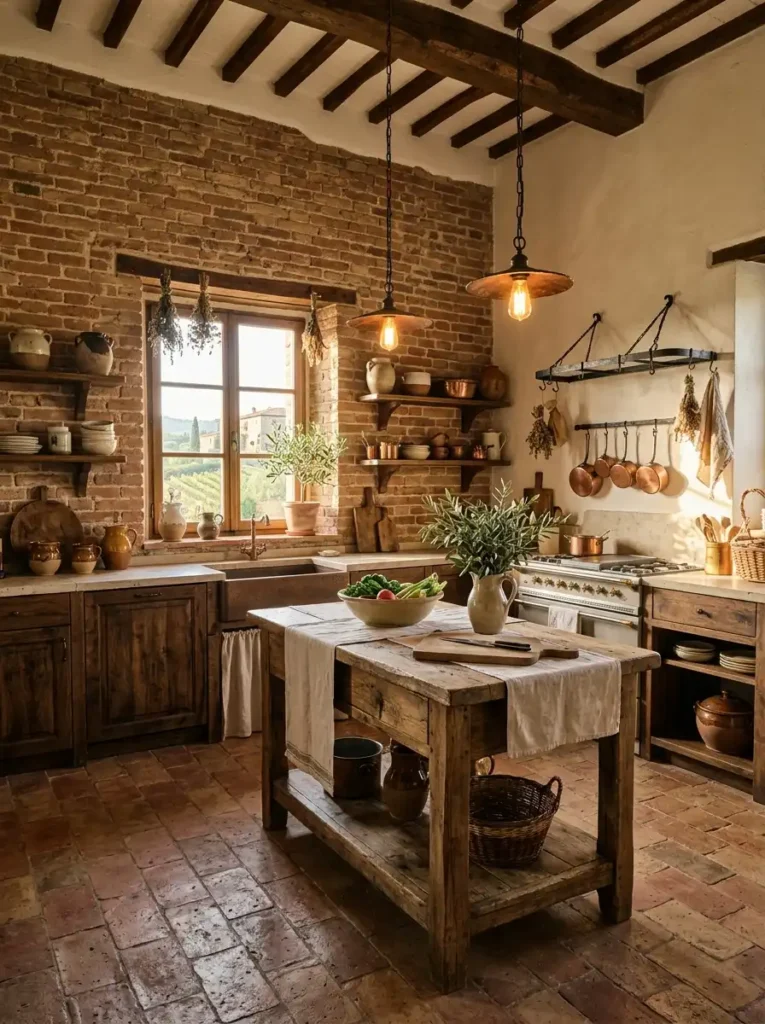
An exposed brick wall adds texture and an aged architectural feeling to a Tuscan kitchen. Warm red and brown brick tones work naturally with terracotta flooring, wood cabinetry, and cream finishes.
Use brick on one main wall rather than covering the entire kitchen. This keeps the rustic effect strong while allowing the other materials to provide balance.
Best For: Adding rustic character without filling the kitchen with extra decor.
18. Large Rustic Dining Table
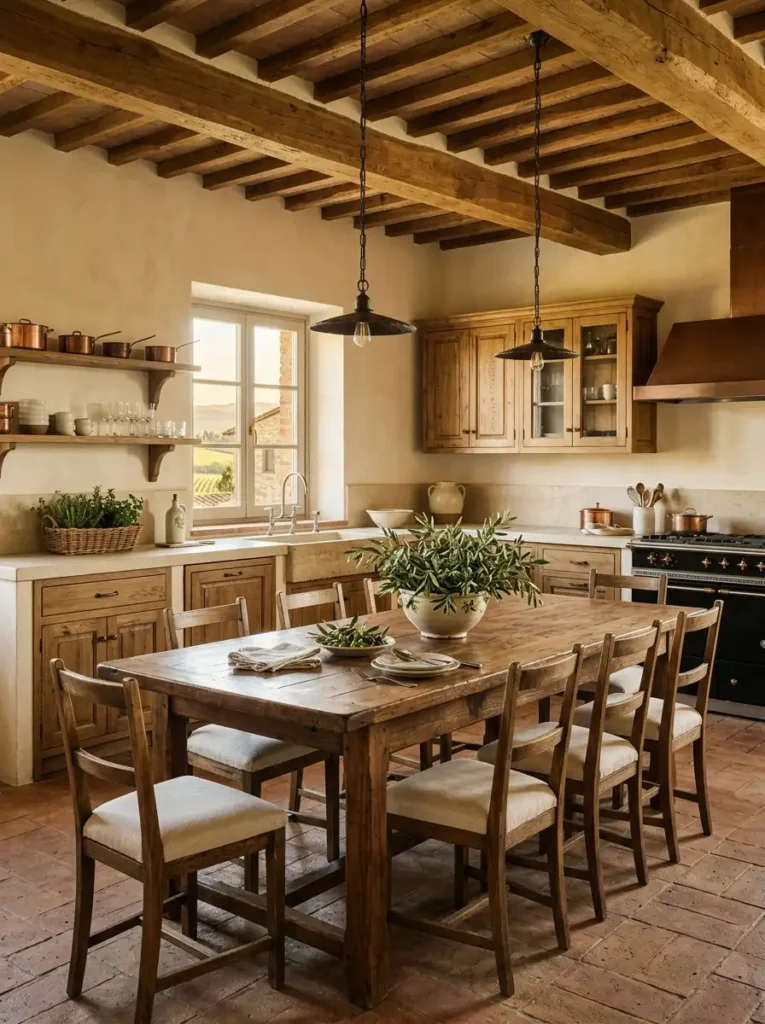
A large wooden dining table can make a Tuscan kitchen feel centered around gathering, conversation, and shared meals. Choose a solid table with visible grain and a slightly aged finish rather than something overly polished.
Surround it with simple wooden or upholstered chairs and keep the tabletop lightly styled. A ceramic bowl, linen runner, or small olive branch arrangement is enough to complete the setting.
Table Style: Solid wood + aged finish + simple linen + ceramic accents
19. Iron Cabinet Hardware
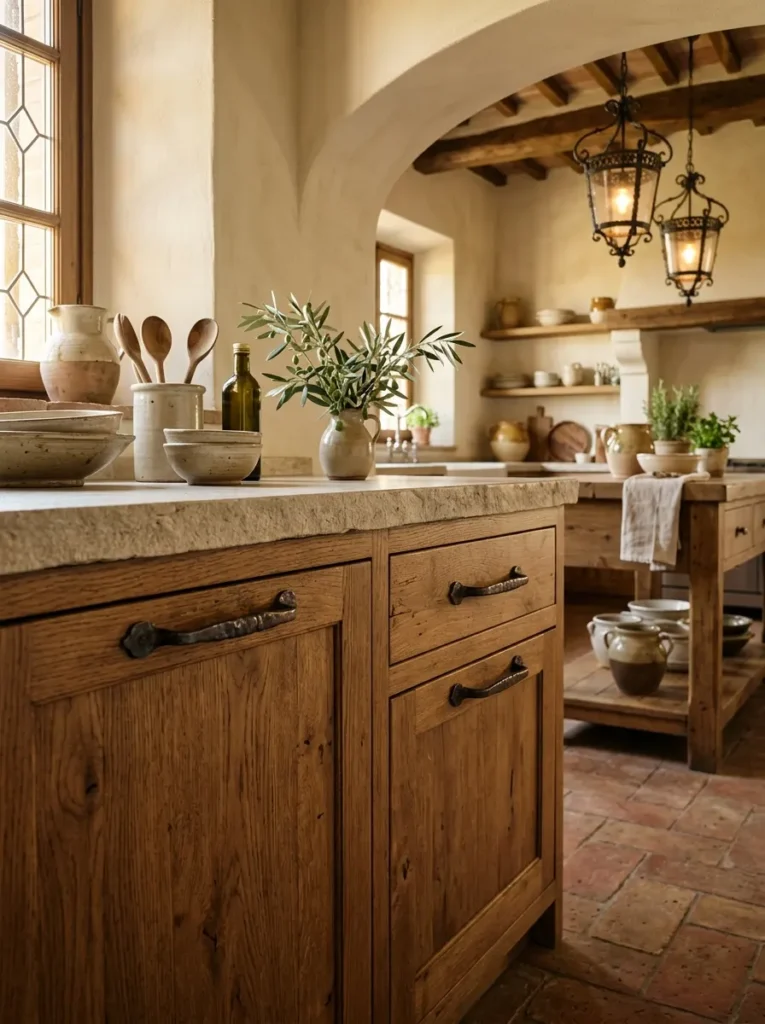
Dark iron handles, pulls, and hinges add a subtle old-world touch to Tuscan cabinetry. Their slightly aged appearance works especially well with warm wood and cream finishes.
Keep the hardware simple and consistent throughout the kitchen. A few dark metal details are enough to create contrast without making the room feel too heavy.
Hardware Finish: Aged iron + warm oak + cream cabinetry
20. Vineyard-Inspired Details
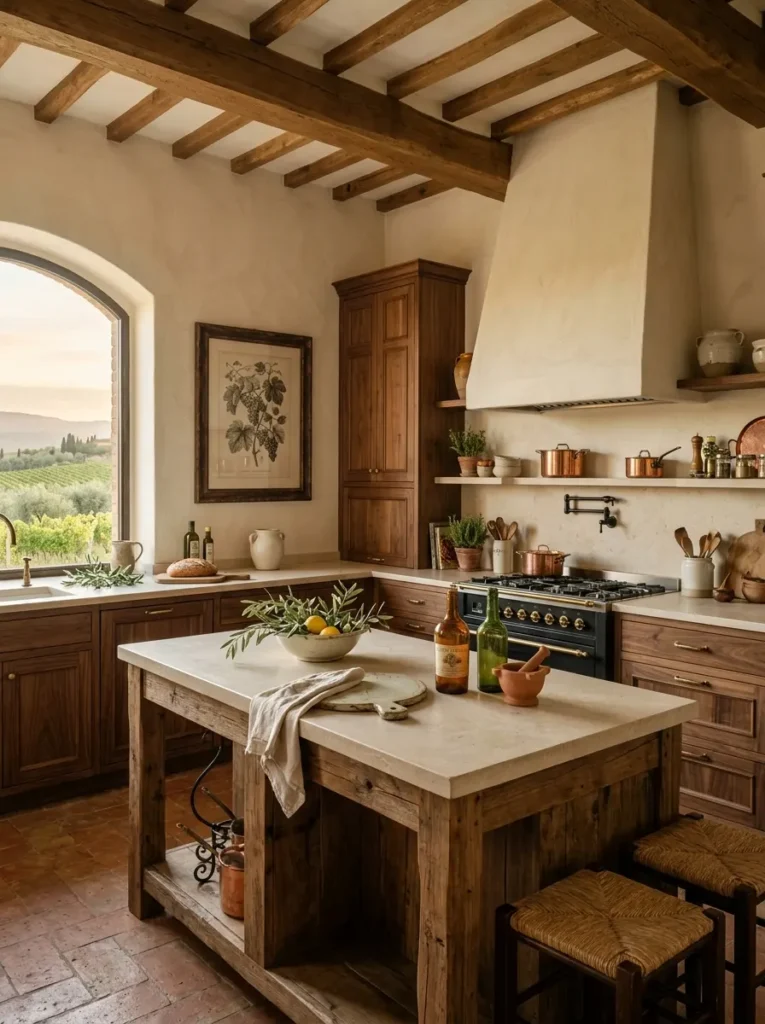
Subtle vineyard-inspired decor can bring a connection to the Tuscan countryside without making the kitchen feel overly themed. A vintage grapevine print, ceramic grapes, or a few aged bottles can add character.
Choose only one or two vineyard details and combine them with natural materials. The goal is to suggest the countryside rather than turn the kitchen into a themed display.
Styling Direction: Grape motifs + aged ceramics + natural wood
21. Textured Plaster Walls
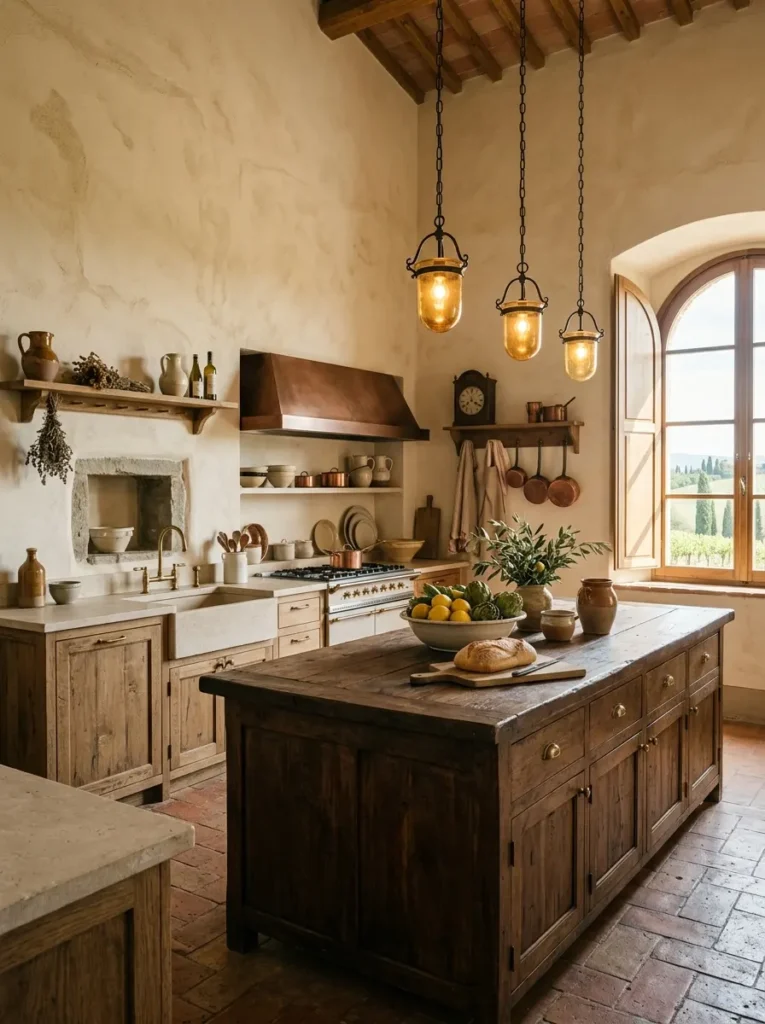
Textured plaster walls give a Tuscan kitchen the imperfect, handcrafted quality of an old Italian home. Warm beige, cream, or soft sand-colored finishes work beautifully with wood and stone.
The uneven surface adds visual depth without needing artwork or excessive decoration. Keep the surrounding elements understated so the natural wall texture becomes part of the design.
Wall Finish: Warm cream plaster + subtle texture + natural imperfections
22. Handmade Pottery Display
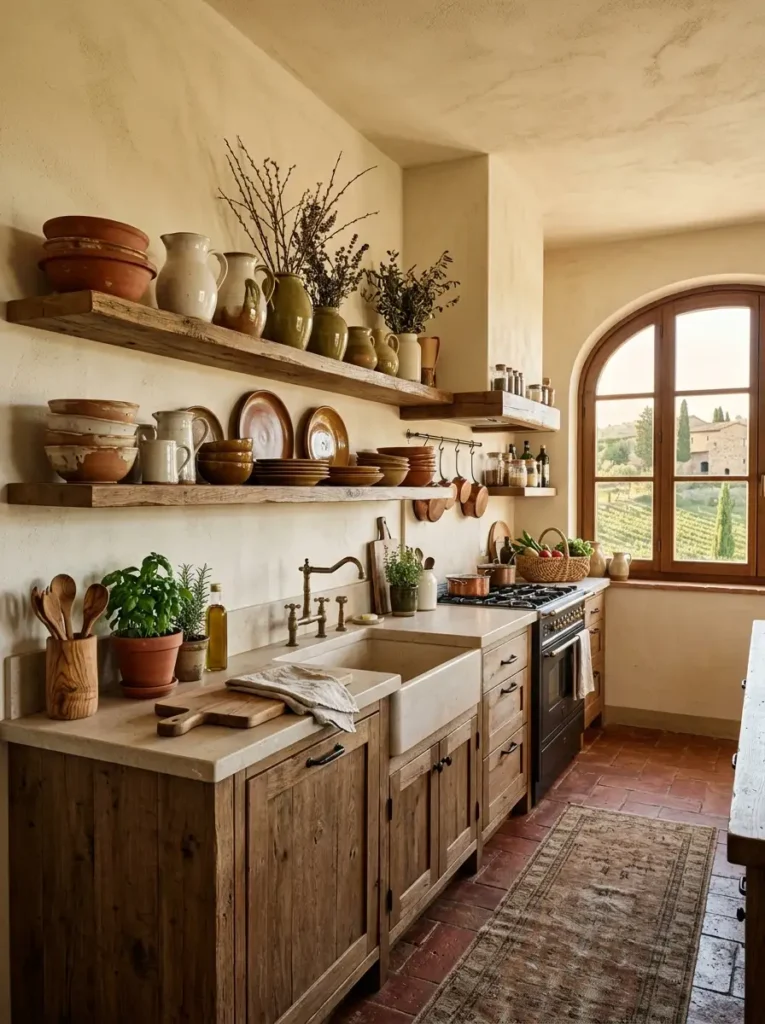
Handmade pottery adds warmth and personality while fitting naturally into the rustic Tuscan aesthetic. Display a small collection of bowls, pitchers, plates, or vases on open shelves, an island, or a wooden sideboard.
Mix different shapes and earthy finishes, but keep the color palette connected. Terracotta, cream, muted olive, and warm brown create a cohesive collection without looking overly matched.
Collection Colors: Terracotta + cream + olive + warm brown
23. Fresh Herb Kitchen Corner
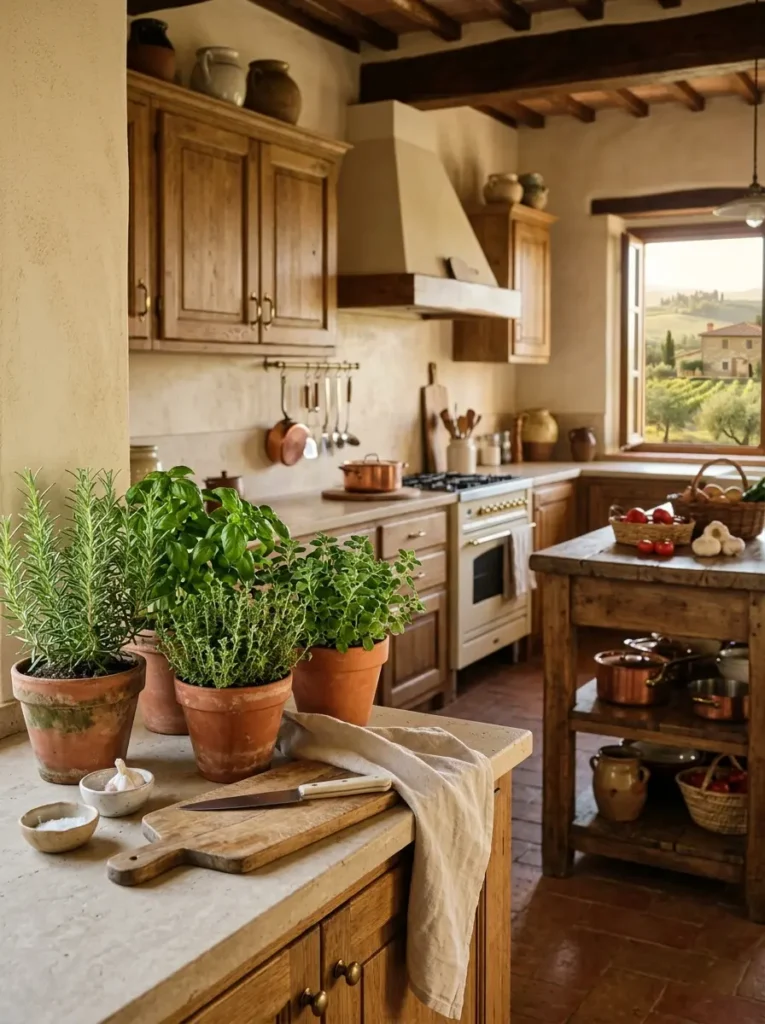
A small collection of fresh herbs can make a Tuscan kitchen feel both beautiful and useful. Basil, rosemary, thyme, and oregano look natural in terracotta pots placed near the cooking area.
Use different pot sizes and keep the arrangement simple. The greenery adds a fresh contrast to warm wood, cream walls, and earthy finishes while reinforcing the connection to Italian cooking.
Greenery: Rosemary + basil + thyme + terracotta pots
Final Thoughts
If you’re only making one change, go with the terracotta tile flooring — it’s the single element that reads as “Tuscan” the fastest, and it works whether your cabinets are painted cream or left as warm natural wood. The reclaimed wood ceiling beams are a close second, though I’ll admit they’re a bigger project if you’re not already dealing with exposed structure.
The thing I’d tell anyone starting a Tuscan kitchen from scratch: resist the urge to do everything on this list at once. Pick two or three elements — say, terracotta tile, a stone backsplash, and warm pendant lighting — and let the room develop from there. The best Tuscan kitchens I saw in Italy weren’t finished in a weekend, and yours doesn’t need to be either.